


Website |
Facebook |
Twitter |
Instagram
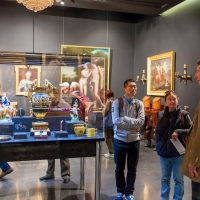
 The Frick Collection is a renowned art museum located in New York City that houses an impressive collection of Western art from the Renaissance through the late 19th century. The museum is housed in the former residence of Henry Clay Frick, a prominent industrialist and art collector.
Tourists would want to visit The Frick Collection for several reasons. First and foremost, the museum's collection is of exceptional quality and includes works by many celebrated artists such as Rembrandt, Vermeer, and Gainsborough. Additionally, the museum's intimate and elegant setting provides a unique and enjoyable experience for visitors.
The Frick Collection also offers a variety of educational programs and events, including lectures, concerts, and family programs, making it a great destination for both art enthusiasts and families. The Frick Collection's location on Fifth Avenue in Manhattan provides easy access to other popular tourist destinations such as Central Park and the Metropolitan Museum of Art, making it a convenient stop for those looking to explore the city's cultural offerings.
The Frick Collection is a renowned art museum located in New York City that houses an impressive collection of Western art from the Renaissance through the late 19th century. The museum is housed in the former residence of Henry Clay Frick, a prominent industrialist and art collector.
Tourists would want to visit The Frick Collection for several reasons. First and foremost, the museum's collection is of exceptional quality and includes works by many celebrated artists such as Rembrandt, Vermeer, and Gainsborough. Additionally, the museum's intimate and elegant setting provides a unique and enjoyable experience for visitors.
The Frick Collection also offers a variety of educational programs and events, including lectures, concerts, and family programs, making it a great destination for both art enthusiasts and families. The Frick Collection's location on Fifth Avenue in Manhattan provides easy access to other popular tourist destinations such as Central Park and the Metropolitan Museum of Art, making it a convenient stop for those looking to explore the city's cultural offerings.







At a Glance
Time Needed: 90 min.
Ages: All
Allows Food/Drink: No
Luggage Storage: No
1 E 70th St, New York, NY 10021 Get Directions
The Frick Collection Videos
In celebration of the Frick’s 90th anniversary, Maeve Turner, the Frick’s Head of Gardens and Horticulture, visited the beloved “Holiday Train Show®” at the New York Botanical Garden, where she was joined in conversation by Michaela Wright, NYBG’s Director of Exhibition Content and Interpretation. The two discussed the model of the Frick mansion, made entirely of botanical materials, which has been in the show for decades. Learn more: https://www.frick.org/90th_anniversary https://www.nybg.org/event/holiday-train-show-2025/ Director: Lisa Goble Producer: Merrill Dowdy Director of Photography: George Koelle Editor: Courtlin Byrd Audio Production: Sean Troxell Editorial: Vincent Tolentino © 2025 The Frick Collection
On Oct. 24, 2025, Director Emeritus Ian Wardropper delivered his lecture, Mansion to Museum, in the Stephen A. Schwarzman Auditorium at The Frick Collection. In this lecture, Wardropper explored the role of Henry Clay Frick’s houses in the development of his art collection, as well as the recent renovation and expansion of 1 East 70th Street to better accommodate the museum’s holdings and audiences.
Follow along with our art handling team as they assemble a silver “Torchère” featured in our current special exhibition “To the Holy Sepulcher: Treasures from the Terra Sancta Museum” ✨🕯️ This is one of two torchères—tall, ornamental stands for candlesticks—featured in the exhibition. Each consists of approximately sixty individual pieces! In 1757, Greek Orthodox clergy ransacked the Holy Sepulcher, damaging a number of silver liturgical objects. Some of that silver was reclaimed and sent to Venice, where it was melted down to create new objects, including these two magnificent torchères. The silver returned to Jerusalem in its transformed state in 1765. See these extraordinary objects while they’re on view, through January 5, 2026. Plan your visit today at frick.org/tickets. #behindthescenes — Video by George Koelle; Al San Lorenzo Giustinian Workshop, Torchère (one of a pair), Venice, 1762. Silver and gilt silver, 96 1/16 × 27 9/16 × 24 13/16 in. (244 × 70 × 63 cm). Terra Sancta Museum, Jerusalem
Discover the groundbreaking exhibition “To the Holy Sepulcher: Treasures from the Terra Sancta Museum” (October 2, 2025, through January 5, 2026) with Xavier F. Salomon, the Frick’s former Deputy Director and Peter Jay Sharp Chief Curator. Xavier is joined by special guest Fra Stéphane Milovitch, Director of the Cultural Heritage Office of the Custody of the Holy Land and Chairman of the Board of Directors of the Terra Sancta Museum. Xavier and Fra Stéphane explore the objects in the show—on display for the first time in North America. Created across Catholic Europe in the seventeenth and eighteenth centuries and donated to the Church of the Holy Sepulcher in Jerusalem, these gold and silver masterpieces and intricate liturgical vestments are largely unparalleled in the world, and many have fascinating connections to works in the Frick’s permanent collection. Learn more and plan your visit today: https://www.frick.org/exhibitions/holy_sepulcher Producer/Director: Lisa Goble Director of Photography: George Koelle Editor: Courtlin Byrd Audio Production: Sean Troxell Original Music: George Koelle Editorial: Noah Purdy © 2025 The Frick Collection
Welcome to "Tabletop Atelier"! Follow along with April Kim Tonin, the Frick's Ayesha Bulchandani Head of Education and Public Engagement, as she guides us through a drawing exercise with pencil and ink. This sketch is inspired by Böttger's red stoneware "Teapot with Cover" from the Meissen Porcelain Manufactory. Learn more about the object at frick.org/art and find it on view in our Portico Gallery. Enjoy this program? Let us know in the comments below and share this with your art community! https://www.frick.org/exhibitions/meissen_palace/2014934
On October 8, 2025, Samantha Deutch, Digital Art History Lead at the Frick Art Research Library, hosted a virtual lunchtime talk with Elizabeth Gorayeb, Executive Director of the Wildenstein Plattner Institute, on the WPI’s online databases and rich archival holdings. Recently, the WPI’s digital archives helped uncover Harlem Renaissance painter Romare Bearden’s portrait of sculptor Edmonia Lewis, previously unknown to scholars. Gorayeb explores what other treasures these archives may hold, and what new avenues of exploration they offer for the study of nineteenth- and twentieth-century art and the history of collecting.
More in The Upper East Side
More Museums
- The Tenement Museum
- New Museum
- International Center of Photography
- Museum at Eldridge Street
- National Museum of the American Indian
- National September 11 Memorial & Museum
- The Rubin Museum of Art
- Whitney Museum of American Art
- The Morgan Library & Museum
- Museum of Modern Art (MoMA)
The Frick Collection News
Review: Who Was That MASQUE-d Man? Davone Tines, with Sonnambula Ensemble at the Frick
Some of the audience at the chamber concert at the Frick Collection Museum—that jewel-box museum of art from the Renaissance to the end of the 19th century on New York’s Upper East Side—had fought its way there through the runners of the NYC Marathon. What they found was definitely worth the effort: an unusual, early 17th century performance piece, of a kind, THE MASQUE OF BLACKNESS, showcasing the star bass-baritone Davone Tines and the museum’s ensemble-in-residence, Sonnambula.
Composer Gregory Spears Reveals 2025-2026 Season Highlights and World Premieres
Composer Gregory Spears has announced a milestone 2025-2026 season, including the debut of his newest opera, Sleepers Awake, at Opera Philadelphia, and the launch of a national, multi-year tour,
Frick Collection Reveals 2025-26 Concerts
The Frick Collection has announced its 2025–26 concert season, marking the return of its longstanding annual classical performance series following the museum’s April 2025 reopening.
The Zimmerli Art Museum Names New Chief Curator
The Zimmerli Art Museum has named Jeremiah William McCarthy as Chief Curator. In this new role, effective January 6, 2025, McCarthy will serve on the Museum’s senior leadership team and participate in shaping its mission and vision.
Music at Kohl Mansion Sets 42nd Annual Chamber Music Season
Hailed by The Boston Globe as “simply the best,” the Quartet will perform an outstanding program of musical works by J.S. Bach, Beethoven, Sibelius, and the local premier of a work by Jamaican-born composer, Eleanor Alberga.
The Vancouver Symphony Orchestra USA to Welcome Back Violinist Rachel Barton Pine in November
The Vancouver Symphony Orchestra USA's 2024-2025 season will continue with the return of internationally celebrated violinist Rachel Barton Pine to Skyview Concert Hall on November 2 at 7 pm and November 3 at 3 pm.
Tempesta Di Mare, Soloists And Chorus To Perform Vivaldi's JUDITHA TRIUMPHANS
Experience the drama of JUDITHA TRIUMPHANS, Vivaldi's stunning oratorio, brought to life by Tempesta di Mare.
Tempesta Di Mare Chamber Players Present Music For 'Unmatched' Instruments By Vivaldi, Telemann, Janitsch, And Zelenka
Tempesta di Mare Chamber Players present music for 'unmatched' instruments by Vivaldi, Telemann, Janitsch, and Zelenka.
Christopher Bishop Fine Art And Master Drawings New York Announce New Leadership
Christopher Bishop Fine Art announces the purchase of Master Drawings New York (MDNY), the premiere art fair for exhibiting exceptional works on paper, established in 2006.
Boarte Piano Trio Joins Suòno Artist Management Roster
Warsaw-based ensemble the Boarte Piano Trio has joined the artist roster of Suòno Artist Management for representation throughout North America.
Lily Snyder Appointed As Colnaghi's First Managing Director Of Modern And Contemporary Art In North America
Colnaghi announced today that Lily D. Snyder has been appointed Managing Director of Modern and Contemporary Art in North America. In this newly created position, Snyder will advance the gallery's commitment to endorsing and supporting connoisseurship across all categories of collecting, from Antiquities to Old Masters to Contemporary Art.
The David Roche Foundation Celebrates 5 Years, 26,000 Visitors And A New Exhibition
The David Roche Foundation House Museum which has the finest private collection of decorative art in Australia with more than 3,000 works, marks its 5th anniversary on 3 June and is celebrating more than 26,000 visitors and a changing exhibition program that has moved from Japan to Russia, and quilts to clocks.
BWW Feature: Virtual Opera Streaming 21-28 at Home Computer Screens
On Wednesday, April 21, We begin this week’s tour with one of the Los Angeles Opera website’s most popular “Living Room Recitals.” Soprano, Latonia Moore sings with pianist Roberto Berrocal. After the recital, we leave for NYC. On arrival, we go to Shut Up and Eat, a most generous Toms River restaurant that offers a discount to patrons in pajamas.
Lantern Theater Company Announces Plays From The Lantern Archives
Lantern Theater Company continues its reimagined 2020/21 season with the announcement of Plays from the Lantern Archives, a new program celebrating some of the finest productions from recent seasons brought vividly back to life on screen.
Countertenor Iestyn Davies And Lutenist Thomas Dunford To Appear In Concert May 19
The San Francisco Early Music Society (SFEMS) brings its 2018-19 concert season to a close next month with a special concert by acclaimed countertenor Iestyn Davies joined by the brilliant young lutenist Thomas Dunford, dubbed the Eric Clapton of the lute (BBC Music Magazine). Together they will perform songs by Dowland, Purcell and Handel. This concert will take place at 4 p.m., Sunday, May 19, at First Congregational Church in Berkeley. Individual tickets, $15 to $56, are available for purchase online at sfems.org.
The Frick Collection Frequently Asked Questions
What are the closest subway stops to The Frick Collection
The closest subway stops to The Frick Collection at 1 E 70th St are:
1. 68th Street-Hunter College Station: This station is served by the 6 train. It is located just a short walk from The Frick Collection.
2. 72nd Street Station: This station is served by the Q train. It is a slightly longer walk from The Frick Collection, but still within walking distance.
As for recommendations, here are a few nearby attractions and restaurants you might enjoy:
1. Central Park: Just a stone's throw away from The Frick Collection, Central Park is a must-visit destination in New York City. Take a leisurely stroll through the park, rent a rowboat on the lake, or simply relax and enjoy the beautiful scenery.
2. The Metropolitan Museum of Art: Located on the eastern edge of Central Park, The Met is one of the world's largest and most renowned art museums. It houses an extensive collection spanning thousands of years and various cultures.
3. The Loeb Boathouse: Situated on the lake in Central Park, The Loeb Boathouse offers a picturesque setting for dining. Enjoy a meal or a drink while taking in the serene views of the water and rowboats gliding by.
4. Café Sabarsky: If you're looking for a place to grab a bite near The Frick Collection, Café Sabarsky is a great option. Located inside the Neue Galerie, this Viennese-style café offers delicious Austrian cuisine in an elegant setting.
For the latest subway updates and information, you can visit the official website of the Metropolitan Transportation Authority (MTA) at www.mta.info. This website provides real-time service updates, schedules, and maps to help you navigate the subway system with ease.
Enjoy your visit to The Frick Collection and have a fantastic time exploring the surrounding area!
What's the best way to get to The Frick Collection by bus?
The Frick Collection at 1 E 70th St in New York City is conveniently located near several bus stops. Here are the closest bus stops:
1. Madison Av/E 70 St: This bus stop is served by the M1, M2, M3, and M4 buses. You can check for real-time bus updates on the MTA BusTime website.
2. 5 Av/E 72 St: This bus stop is served by the M1, M2, M3, M4, and M72 buses. You can check for real-time bus updates on the MTA BusTime website.
3. Madison Av/E 72 St: This bus stop is served by the M1, M2, M3, and M4 buses. You can check for real-time bus updates on the MTA BusTime website.
Please note that bus schedules and routes are subject to change, so it's always a good idea to check for updates before your trip. Have a great time exploring The Frick Collection!
How much time should I plan to spend at The Frick Collection?
The ideal length of time to plan to spend at The Frick Collection in New York City depends on your level of interest in art and your schedule. However, most visitors find that spending around 1.5 to 2 hours allows for a leisurely exploration of the museum's highlights.
The Frick Collection is a small but incredibly rich museum housed in the former residence of industrialist Henry Clay Frick. It features a remarkable collection of European paintings, sculptures, and decorative arts from the Renaissance through the late 19th century. Some of the must-see masterpieces include works by Vermeer, Rembrandt, Goya, and Turner.
While the museum is not as large as some of the other renowned institutions in New York City, it offers an intimate and immersive experience. Take your time to appreciate the exquisite details of the artworks, stroll through the stunning galleries, and soak in the elegant atmosphere of the mansion.
If you're a true art lover or have a particular interest in a specific artist or period, you may want to allocate more time to fully explore the collection. On the other hand, if you're on a tight schedule, you can still have a fulfilling visit by focusing on the highlights and spending around an hour at the museum.
Remember, The Frick Collection is located in a beautiful neighborhood on the Upper East Side, so you might also want to take a stroll in Central Park or enjoy a meal at one of the nearby restaurants to make the most of your visit to this part of the city.
Can I bring food and drinks into The Frick Collection?
The Frick Collection is an art museum located on the Upper East Side of Manhattan in New York City. While the museum itself does not have a restaurant or café on its premises, it does have a small outdoor garden where visitors can enjoy light refreshments. However, please note that outside food and drinks are not allowed inside the museum or in the galleries.
If you're looking for a bite to eat before or after your visit to The Frick Collection, there are plenty of wonderful dining options in the surrounding neighborhood. The Upper East Side is known for its diverse culinary scene, offering everything from upscale restaurants to casual cafes and delis. Whether you're in the mood for Italian, French, American, or any other cuisine, you'll find something to satisfy your taste buds.
Additionally, Central Park is just a short walk away from The Frick Collection, and it's a great place to have a picnic if the weather permits. There are several food vendors and carts around the park where you can grab a quick bite or a refreshing drink.
Remember to check the opening hours and availability of any restaurants or food vendors you plan to visit, as they may have specific operating hours or restrictions due to COVID-19 or other factors. Enjoy your visit to The Frick Collection and your culinary adventures in the Upper East Side!
Does The Frick Collection offer luggage storage?
The Frick Collection, located on the Upper East Side of Manhattan, does not provide luggage storage facilities for visitors. Due to security concerns, large bags, backpacks, and suitcases are not allowed inside the museum. However, smaller bags and personal items can be checked at the coat check free of charge. If you have larger luggage, I recommend utilizing luggage storage services available throughout the city, such as at airports, train stations, or specialized storage facilities. This will allow you to explore the museum and its stunning art collection without any worries.
Is The Frick Collection a good place to visit for foreign travelers who are not native English speakers?
Yes, The Frick Collection is definitely worth a visit for visitors from other countries and non-English language speakers. While the museum does not offer guided tours in languages other than English, it provides audio guides in multiple languages, including Spanish, French, German, Italian, and Japanese. These audio guides offer detailed explanations of the artworks on display and enhance the visitor experience.
Additionally, The Frick Collection is renowned for its exceptional collection of European art, including masterpieces by renowned artists such as Vermeer, Rembrandt, and Turner. The museum's intimate setting and beautiful mansion setting make it a unique and enjoyable experience for all visitors, regardless of their language background.
The Frick Collection also offers free Wi-Fi, which allows visitors to access online translation tools or research further information about the artworks on display. The museum's staff is also friendly and knowledgeable, and they are always ready to assist visitors with any questions or concerns they may have.
Overall, The Frick Collection offers a culturally enriching experience for visitors from all over the world, and its language support ensures that non-English speakers can fully appreciate and enjoy the museum's treasures.
What ages are appropriate for The Frick Collection?
The Frick Collection in New York City is a wonderful destination for art enthusiasts of all ages. While there is no specific recommended age range, the museum offers a variety of exhibits and programs that can be enjoyed by visitors of different ages and interests. Families with children are welcome to explore the museum together, and there are often special events and activities designed for younger visitors. However, it's worth noting that the museum does have a more serene atmosphere, so it's important to ensure that children are able to appreciate and respect the artwork on display.
Videos