

Website |
Facebook |
Twitter |
Instagram
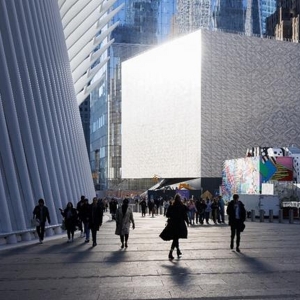
 The National September 11 Memorial & Museum is a powerful and somber tribute to the nearly 3,000 people who lost their lives in the terrorist attacks of September 11, 2001. The site encompasses two main components: the memorial, which features two reflecting pools in the footprints of the former Twin Towers, and the museum, which contains artifacts, personal stories, and interactive exhibits that explore the events and aftermath of 9/11.
Visiting the National September 11 Memorial & Museum can provide a unique and deeply moving experience for tourists. The site offers an opportunity to pay respects to those who lost their lives and reflect on the impact of the attacks on the world. It also allows visitors to learn more about the history and context of the events of 9/11, as well as the ongoing efforts to rebuild and remember. Overall, a visit to the National September 11 Memorial & Museum can be a powerful and educational experience that honors the memory of those who were lost and helps promote understanding and healing.
The National September 11 Memorial & Museum is a powerful and somber tribute to the nearly 3,000 people who lost their lives in the terrorist attacks of September 11, 2001. The site encompasses two main components: the memorial, which features two reflecting pools in the footprints of the former Twin Towers, and the museum, which contains artifacts, personal stories, and interactive exhibits that explore the events and aftermath of 9/11.
Visiting the National September 11 Memorial & Museum can provide a unique and deeply moving experience for tourists. The site offers an opportunity to pay respects to those who lost their lives and reflect on the impact of the attacks on the world. It also allows visitors to learn more about the history and context of the events of 9/11, as well as the ongoing efforts to rebuild and remember. Overall, a visit to the National September 11 Memorial & Museum can be a powerful and educational experience that honors the memory of those who were lost and helps promote understanding and healing.




At a Glance
Time Needed: 180 min.
Ages: All
Allows Food/Drink: No
Luggage Storage: No
180 Greenwich St, New York, NY 10007 Get Directions
National September 11 Memorial & Museum Videos
Last week, we gathered to mark the 24th anniversary of the 9/11 attacks, honoring the lives lost, the resilience of survivors, and the strength of our community. Attending the ceremony were 5,500 family members and guests, with 208,000 combined views on Facebook and our live stream. Thank you to all who joined us in remembrance. #911memorial #911museum #NeverForget911 #NYC
Join us for a live performance of The Legacy of Welles Remy Crowther: The Man in the Red Bandana, a documentary play by Lisa Rafferty created verbatim from interviews with Welles' friends, family and others impacted by his courage and compassion. For this special event, the play will be presented as a concert-reading performance, featuring a cast of 15, including firefighter-actors, actors from Broadway, and Boston College. #911memorial #911museum #NeverForget911 #publicprogram #NYC #education
Battery Dance, a lower Manhattan–based dance company, held a public dance festival at the World Trade Center Plaza every year between 1982 and 2001. Just two weeks after the 9/11 attacks, the company presented a spontaneous performance entitled Pavilion at the Franklin Street subway station on the cusp of the “frozen zone." In conversation with Museum Director Clifford Chanin, Founder and Artistic Director of Battery Dance Jonathan Hollander, Dancer Tadej Brdnik, Composer and Tabla Player Samir Chatterjee, and Composer and World Percussionist Yousif Sheronick, reflect on the importance of the performance and what it means almost 25 years later. The discussion will be followed by a re-staged performance of Pavilion by Kar'mel Small. #911memorial #911museum #NeverForget911 #publicprogram #NYC #education
By the morning of September 12, 2001, an estimated 5,000 people had arrived at Ground Zero to assist in the rescue and recovery efforts. Each brought specialized knowledge and a commitment to serve in the face of overwhelming obstacles. As the 9/11 Memorial & Museum commemorates the 23rd anniversary of the end of these efforts, retired carpenter Ramona Diaz, former Transport Workers Union Safety Inspector Dominick Spagnolo, and former lighting technician Charles Libin join 9/11 Memorial & Museum President & CEO Beth Hillman in conversation to highlight their work, and that of their unions, during that time. #911memorial #911museum #neverforget911 #publicprogram #nyc #education
Just ten blocks from the World Trade Center, Chinatown was the largest residential area affected by 9/11. Much of the impact was strikingly visible as the collapse of the Twin Towers filled the neighborhood with heavy smoke, dust, and debris. The aftermath of the attacks challenged the community as tourism declined, businesses closed, and health concerns amongst residents rose. It would also, however, spur people to action, cast light on the neighborhood's needs and prove its resilience. To better understand the consequences of 9/11 on Chinatown, Senior Curator of Oral History & Vice President of Collections, Amy Weinstein is joined by Professor of Sociology at Hunter College, Margaret Chin, writer and educator, Annie Tan, and retired FDNY Lieutenant Jacob Chin. Together they reflect on their own experiences in Chinatown during and after the attacks and discuss how the neighborhood was forever shaped by this tragedy. #911Memorial #911Museum #NeverForget911 #publicprogram #NYC #education
The Alfred P. Murrah Federal Building in Oklahoma City was bombed on April 19, 1995, killing 167 people. In response, FEMA activated 11 Urban Search and Rescue teams from around the country, including New York Task Force 1. The 56-member task force was comprised of members of the FDNY, NYPD and EMS, nine of whom were later killed responding to the World Trade Center on 9/11. As we mark the 30th anniversary of the Oklahoma City bombing, Museum Director Clifford Chanin is joined by retired FDNY Battalion Chief Stephen Spall, retired EMS Division Chief Charles Wells and retired NYPD ESU Detective Kenneth Winkler to discuss their response to both unprecedented attacks, the challenges faced in urban search and rescue operations, and the profound lessons learned that continue to shape emergency response today. #911Memorial #911Museum #NeverForget911 #publicprogram #NYC #education #OklahomaCityBombing
More in Financial District
More Museums
- The Tenement Museum
- New Museum
- International Center of Photography
- Museum at Eldridge Street
- National Museum of the American Indian
- The Rubin Museum of Art
- Whitney Museum of American Art
- The Morgan Library & Museum
- Museum of Modern Art (MoMA)
- Museum of Arts and Design
National September 11 Memorial & Museum News
New York City Celebrates More Than $210 Million In Funding At 80 Cultural Nonprofits Citywide
DCLA has announced over $210 million in new funding for capital projects at 80 cultural nonprofits across New York City, supporting arts and cultural infrastructure.
Perelman Performing Arts Center Announces Inaugural Season
Mike Bloomberg, Chair of the Perelman Performing Arts Center (PAC NYC) board of directors, joined Executive Director Khady Kamara and Artistic Director Bill Rauch to announce the span of inaugural programs at the new performing arts center at the World Trade Center site in Lower Manhattan.
Anne M. Finucane to Receive Carnegie Hall Medal of Excellence
Carnegie Hall has announced that Anne M. Finucane, Vice Chairman of Bank of America, will receive the Carnegie Hall Medal of Excellence at a gala benefit on Wednesday, November 10 at 6:30 p.m. at The Plaza.
Metropolitan Opera Announces Cast Change for VERDI'S REQUIEM
Michelle DeYoung will be the mezzo-soprano soloist in the September 11, 2021, performance of Verdi’s Requiem, replacing Elīna Garanča, who is indisposed.
The Metropolitan Opera Announces VERDI'S REQUIEM: THE MET REMEMBERS 9/11
The Metropolitan Opera will present a pre-season performance of Verdi’s Requiem to commemorate the 20th anniversary of September 11. On Saturday, September 11, 2021, at 7:45pm ET, Music Director Yannick Nézet-Séguin will conduct the Met Orchestra and Chorus with a quartet of star soloists.
New York Choral Society Announces Two New Board Members, New Chair And Chair Emeritus Named
New York Choral Society, New York's pioneering symphonic chorus that explores unique collaboration and dynamic repertory, has announced the appointment of 2 new members to its Board of Trustees: Robert Carpenter and Christopher Wogas, while naming Gary Pai as its new elected Chair and Michael Colosi to the new position of Chair Emeritus.
Carlton Fine Arts Hosts Artist Reception For Charles Fazzino's 9/11: A TIME OF REMEMBRANCE
The new piece will be privately unveiled at The National September 11 Memorial & Museum, where Fazzino will be joined by Anthoula Katsimatides, 9/11 Family Member; Joseph Esposito, Former Chief of Department, NYPD; Salvatore Cassano, Former Commissioner, FDNY; Salvatore Carcaterra, Former, Deputy Chief, NYPD; and San Panchal, Former 1st Grade Detective & 9/11 Hero, NYPD.
Governor Herbert, Congressman McAdams, Senator Escamilla Join Utah Symphony In Musical Tribute
On Friday, Utah Symphony percussion and brass musicians released a musical tribute video performance of Aaron Copland's stirring a?oeFanfare for the Common Mana?? dedicated to essential workers who have kept Utah communities safe, healthy and functioning during the COVID-19 crisis. They were joined with words of thanks from Utah state Governor Gary Herbert, Congressman Ben McAdams and Senator Luz Escamilla, all recorded from their homes. The video can be viewed here:
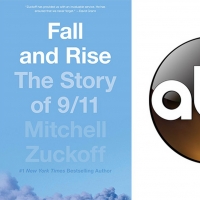
ABC Announces New Series FALL AND RISE: THE STORY OF 9/11
ABC Entertainment President Karey Burke announced today that ABC has secured the rights to Mitchell Zuckoff's bestselling book “Fall and Rise: The Story of 9/11.” In order to commemorate and honor the 20th anniversary of the events of September 11, the network will develop a limited series based on the Harper Collins book in 2021. The series will be produced by Lionsgate and 3 Arts Entertainment and executive produced by Erwin Stoff and Richard Abate of 3 Arts as well as Mitchell Zuckoff.
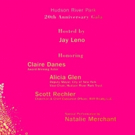
Jay Leno to Host 20th Anniversary Gala to Celebrate The Hudson River Park
The Hudson River Park has announced that they will honor Award-winning actor, Claire Danes; Deputy Mayor, City of New York & Vice Chair, Hudson River Park Trust, Alicia Glen and Chairman & CEO, RXR Realty LLC, Scott Rechler at the 2018 Gala on Thursday, October 11th at Pier 62 in Hudson River Park.
Norah O'Donnell Sits with FBI Director Christopher Wray on CBS THIS MORNING
CBS THIS MORNING Co-Host Norah O'Donnell sits with FBI Director Christopher Wray in his first extensive, multi-part interview talking about terrorism, the nation today and the state of the agency. The wide-ranging interview, conducted over several hours on multiple days, will be broadcast Sept. 11, 2018 and Sept. 13, 2018 (7:00-9:00 AM) on the CBS Broadcast Network.
Make Music Day Announces Lineup; MAMMA MIA Sing Along, Jessica Keenan Wynn and More
Make Music New York, a one-of-a-kind festival occurring each June 21, today announced its full schedule of over 1,000 free outdoor concerts, music lessons and jam sessions in public spaces across the five boroughs. The daylong musical celebration on the summer solstice is the flagship event of Make Music Day, which is being held in more than 80 U.S. cities and has become a global phenomenon observed by hundreds of millions of people in 800 cities in 120 countries.
LMCC's Downtown Dinner 2017 to Honor Durst Family, Keith Haring Foundation and More
Lower Manhattan Cultural Council's (LMCC) annual fundraising gala, The Downtown Dinner, takes place on Thursday, May 4 at 6:00 p.m. at Conrad New York.
Tribeca Film Festival Announces Tribeca TV 2017 Lineup
The 2017 Tribeca Film Festival, presented by AT&T, today announced the lineup for the second annual television festival, Tribeca TV, featuring a mix of world premieres of some of the most talked-about new series/
History to Premiere AMERICA'S 9/11 FLAG: RISE FROM THE ASHES, 9/11
The iconic American flag that was raised by three New York City firefighters at Ground Zero on September 11, 2001, and later disappeared, has been recovered in Everett, WA.
National September 11 Memorial & Museum Frequently Asked Questions
What are the closest subway stops to National September 11 Memorial & Museum
The closest subway stops to the National September 11 Memorial & Museum at 180 Greenwich St are:
1. World Trade Center (E train): This subway stop is located right next to the memorial site, making it the most convenient option. You can take the E train to get there.
2. Fulton Street (2, 3, 4, 5, A, C, J, Z): This subway station is also nearby and provides access to multiple subway lines, making it a convenient option if you are coming from a different part of the city.
I highly recommend checking the MTA website for any subway updates or changes in service that might affect your journey. You can find the most up-to-date information at the following link: MTA website.
While you're in the area, I also suggest visiting the One World Observatory, located at One World Trade Center. It offers breathtaking views of the city from the tallest building in the Western Hemisphere. You can find more information and purchase tickets on their official website: One World Observatory.
Additionally, the nearby Brookfield Place offers a variety of dining options and shopping opportunities. It's a great place to grab a bite to eat or relax after your visit to the memorial. You can find more information about Brookfield Place on their website: Brookfield Place.
I hope you have a meaningful visit to the National September 11 Memorial & Museum and enjoy exploring the surrounding area!
What's the best way to get to National September 11 Memorial & Museum by bus?
The closest bus stops to the National September 11 Memorial & Museum at 180 Greenwich St in New York City are:
1. Greenwich St/Warren St: served by the M20 bus. You can check for updates on the M20 bus schedule [here](http://bustime.mta.info/m/index?q=M20).
2. Church St/Vesey St: served by the M9 and M22 buses. You can check for updates on the M9 bus schedule [here](http://bustime.mta.info/m/index?q=M9) and the M22 bus schedule [here](http://bustime.mta.info/m/index?q=M22).
Please note that bus schedules are subject to change, so it's always a good idea to double-check the MTA website or use a transit app for real-time updates.
How much time should I plan to spend at National September 11 Memorial & Museum?
The ideal length of time to plan for a visit to the National September 11 Memorial & Museum in New York City can vary depending on your level of interest and engagement with the subject matter. On average, most visitors spend about 2 to 3 hours exploring the museum and memorial.
To fully absorb the exhibits and pay tribute to the victims and heroes of 9/11, it's recommended to allocate a minimum of 2 hours for your visit. This will allow you to take your time and reflect on the powerful displays, artifacts, and personal stories that are showcased throughout the museum.
However, if you have a deep interest in the events of 9/11 or if you plan to engage in the museum's interactive experiences, you may want to set aside more time. Some visitors spend up to 4 or 5 hours immersing themselves in the exhibits and participating in guided tours.
Keep in mind that the museum can be emotionally intense, so it's important to allow yourself enough time to process the experience and take breaks if needed. Additionally, consider the possibility of waiting in line for entry, especially during peak tourist seasons, which could affect your overall time at the museum.
Ultimately, the National September 11 Memorial & Museum is a deeply moving and significant site, and it's worth allocating a sufficient amount of time to fully appreciate its importance and impact.
Can I bring food and drinks into National September 11 Memorial & Museum?
The National September 11 Memorial & Museum in New York City has a food and drink policy in place to ensure a respectful and clean environment for all visitors. Inside the museum, food and beverages are not allowed in the exhibition halls or theaters. However, there are designated areas where you can enjoy your snacks or drinks, such as the outdoor Memorial Plaza or the museum's café.
Please note that the café inside the museum offers a variety of food and beverage options if you prefer to grab a bite to eat during your visit. Additionally, there are many restaurants and cafes in the surrounding area where you can enjoy a meal before or after your visit to the memorial and museum.
Remember to be mindful of your surroundings and dispose of any trash properly to help maintain the solemn atmosphere of this important site.
Does National September 11 Memorial & Museum offer luggage storage?
The National September 11 Memorial & Museum in New York City does not offer luggage storage facilities. For security reasons, visitors are not permitted to bring large bags or luggage into the museum. However, they do provide a coat check service where you can store your coats and small personal items. If you have larger bags or luggage, it is recommended to store them at a nearby luggage storage facility or at your hotel. There are several luggage storage options available throughout the city, including convenient locations near major transportation hubs and popular tourist attractions.
Is National September 11 Memorial & Museum a good place to visit for foreign travelers who are not native English speakers?
Yes, the National September 11 Memorial & Museum in New York City is definitely worth visiting for visitors from other countries and non-English language speakers. The memorial and museum provide a powerful and moving experience that transcends language barriers.
The memorial itself, located at the site of the former World Trade Center towers, is a beautiful tribute to the victims of the September 11th attacks. The two reflecting pools, which are set in the footprints of the original Twin Towers, are inscribed with the names of those who lost their lives. The design and symbolism of the memorial can be appreciated by all, regardless of language.
Inside the museum, you will find a comprehensive and immersive experience that tells the story of the events of September 11th, 2001, and their aftermath. The exhibits include artifacts, photographs, videos, and personal stories that provide a deep understanding of the tragedy and its impact on the world. While the majority of the exhibits are in English, there are also multilingual audio guides available in several languages, including Spanish, French, German, Italian, Japanese, and Mandarin. These audio guides offer detailed explanations and commentary, ensuring that non-English speakers can fully comprehend the exhibits.
Additionally, the museum staff is trained to assist visitors from all over the world. They are knowledgeable, friendly, and ready to help answer any questions you may have, regardless of the language you speak.
Overall, the National September 11 Memorial & Museum is a must-visit destination for anyone interested in learning about this significant event in history. It offers a meaningful and educational experience that can be appreciated by visitors from all backgrounds and languages.
What ages are appropriate for National September 11 Memorial & Museum?
The National September 11 Memorial & Museum in New York City is suitable for visitors of all ages. However, it is important to note that the museum covers the events of September 11, 2001, which may be emotionally challenging for younger children. Parents should use their discretion when deciding whether their children are ready for the content presented. The memorial itself, with its reflecting pools and the names of the victims, can be a somber but meaningful experience for visitors of all ages.
Videos