
Andrew Kober Dives Deep Into GIULIA: THE POISON QUEEN OF PALERMO, Saying Goodbye to THE QUEEN OF VERSAILLES and More
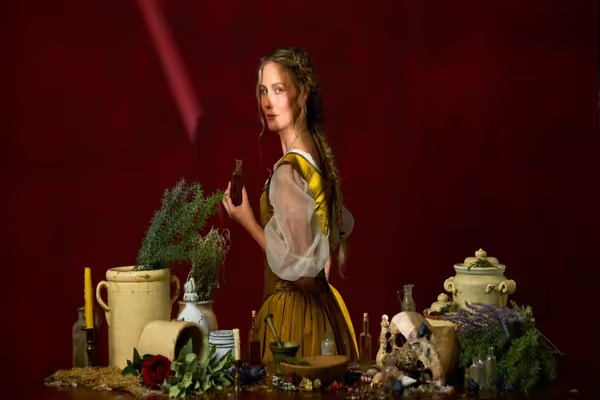
Giulia: The Poison Queen of Palermo runs from June 28 to July 26 at PAC NYC.
Do you have a burning Broadway question? Dying to know more about an obscure Broadway fact? Broadway historian and self-proclaimed theatre nerd Jennifer Ashley Tepper is here to help with Broadway Deep Dive. BroadwayWorld is accepting questions from theatre fans like you. If you're lucky, your question might be selected as the topic of her next column!
Submit your Broadway question here!
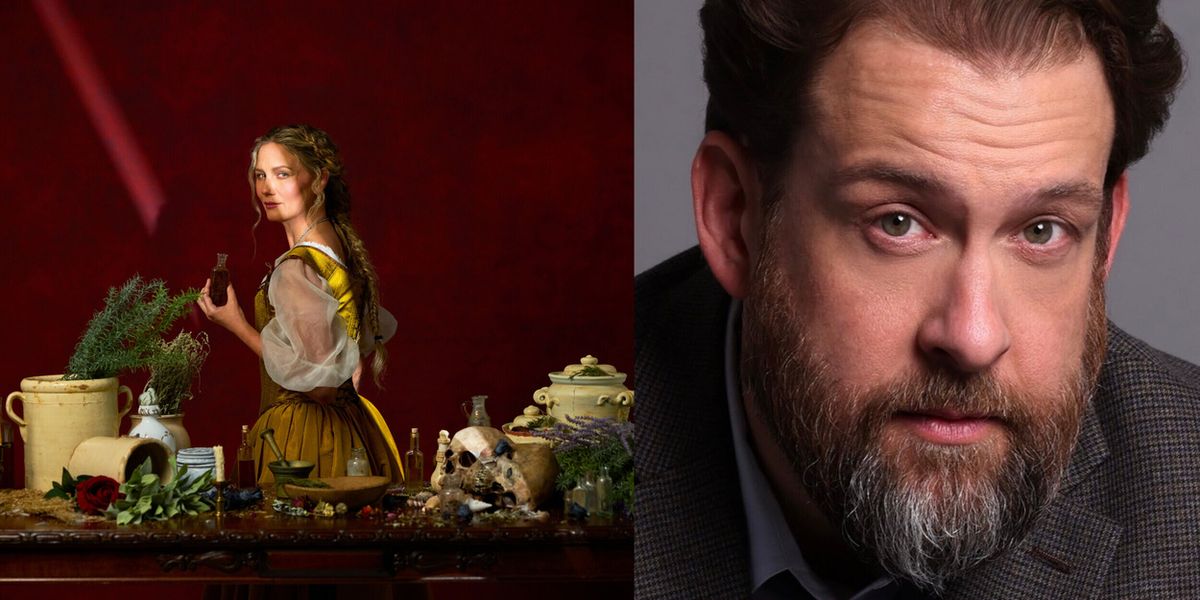
About to world premiere Jennifer Nettles’ new musical, Giulia: The Poison Queen of Palermo, Andrew Kober reflects on the rehearsal process, his 10 Broadway shows starting with the beloved Hair revival, and performing in five musical productions—from The Queen of Versailles to The Wild Party—in one NYC season.
Tell us about Giulia: The Poison Queen of Palermo. What is the show about, who do you play in it, and did I pronounce it correctly?
You sure did… although hearing the mispronunciations has been one of the great joys of being in Giulia: The Poison Queen of Palermo.
It is this incredible, true story about this woman named Giulia Tofana in the 17th century in Palermo, Italy. It’s a story about female empowerment and it’s written by and starring Jennifer Nettles, who I was not super familiar with before. I knew the name and I remembered that she’d gone into Waitress. That was my main touchpoint with Jennifer Nettles.
This is among the best scores I’ve ever heard for the musical theatre, and it’s among the best cast of singers I’ve ever been a part of. I cannot believe how exciting this material is. It’s a thrilling, true story.
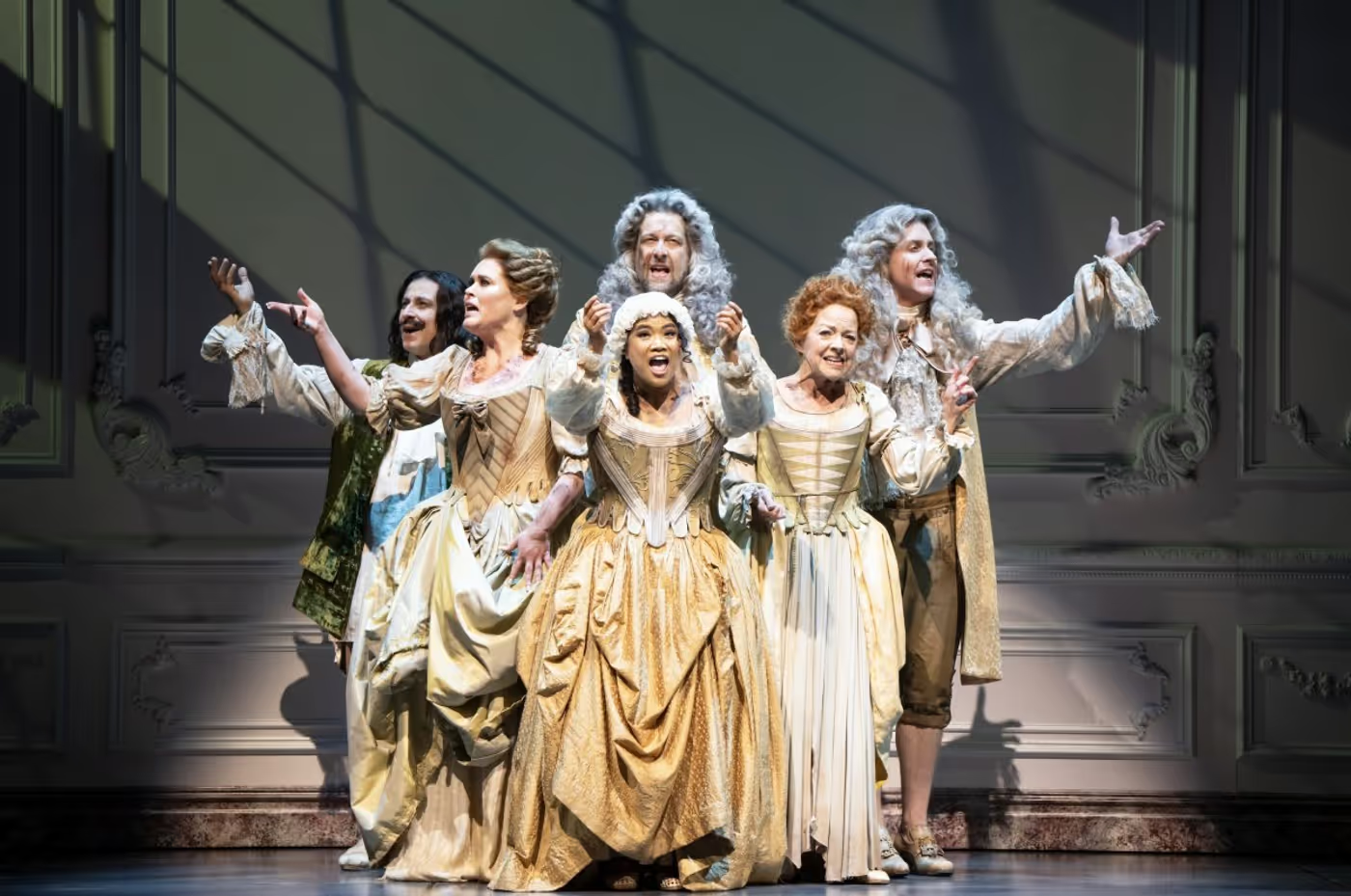
I play various unsavory dudes hanging around in Palermo. My main character is Pietro, but [I’m playing] what my wife calls an Andrew Kober track, in that I am playing many different guys who pop in with a slightly different hat or voice. It’s a thrilling piece and I’m so excited to be a part of it.
I’ve never been to the PAC downtown so I’m excited to move in there. We start tech next week, which will be really thrilling. I hear it’s just the most incredible space.
It’s so new! How cool to get to do a show in it when it’s near the beginning of its existence.
Absolutely. Shamefully, I’ve been in New York and its environs for [about] 20 years and have spent almost no time below 14th Street. I rarely have had occasion to, so I’m psyched to discover a part of the city that I haven’t spent a lot of time with. That’ll be fun for me, too.
.jpg?format=auto&width=1400)
Since you weren’t familiar with [Jennifer Nettles’] work before, have gone on a deep dive of her songs since you were cast?
Very thoroughly, yes. I tried to be cool about it because [she’s] my new boss and colleague and I don’t want to go too deep down a fandom rabbit hole. I want to try to stay cool at rehearsal. But her music is so exciting. It’s so melodic. The stuff she’s written for Giulia is pretty different than any of her other pop, country, rock, soul, folk, or world [music]. It’s a contemporary musical theatre score with songs that are very actively telling the story in a really rich way that I think could only really be served by the musical theatre.
And as much of a fan as I have become of her songwriting, I am equally a fan of her as a performer. She is the real thing as a singer and actor. She is certainly carrying a lot of weight in this musical, although not alone. Everyone’s got a lot to do. So yes, I’ve become the world’s biggest Jennifer Nettles fan.
This audition first came up when I was doing The Queen of Versailles. Pour one out for The Queen of Versailles. I mentioned [my audition] to Kristin Chenoweth and she was like, “Jen is the best, you’re going to love her! I’m going to send her a text right now and tell her: You’ve got to work with my friend, Kober.” Whether she did that and whether it had anything to do with anything, [I don’t know], but she was right: Jen is a gem, and getting to know her has been a treat.
I’m so excited to see it. As a theatre nerd, my entry point for learning about [most popular artists] is usually a musical they’re involved with. So I’m excited to dive into her work more, like you have.
It’s always an excuse for me to learn something that the real world knows about. [A new musical like this] is a nice touchpoint for people like you and I to make our way into what everyone else has been [listening] to while we’ve been seeing The Jellicle Ball.
Totally. Has any of the process involved research into the time period that the show takes place in?
Yes. We’re setting the show squarely when it’s set. It [involves] historical events and people, primarily. So the physical world of the play is very much 1600s Italy, which has required a fair amount of research. My character is fictional, so it hasn’t required a ton of research in that way. The music is contemporary musical theatre, in a way that is thrilling. [During] the first couple of days of [rehearsal], we talked a lot about finding our way from one [time period] to the other, finding a way to bridge those gaps. It’s obviously a thing that’s been done in the musical theatre, but when it’s done really successfully, it’s like when they translate a beautiful novel originally written in another language into English. A great translator can make a story sing.
I speak decent French. I could read Les Mis in French, and it would be a struggle and it would take me months. Instead, I read a good English translation, and because it’s in a language that is something I’m more comfortable with, the story is illuminated to me in a way it wouldn’t necessarily have been otherwise. That’s what this feels like to me. Could we have [told this story] in Baroque Italian song? Definitely. And there are certain musical and choreographic nods to that. But it’s a contemporary musical theatre score in a way that I think makes the storytelling and the intention and the character all really clear to audiences, which is great.
Can you talk more about your fellow cast mates? Is there anyone you’ve worked with before or anyone you’ve always wanted to work with? What has the cast collaboration been like?
Yes! I’m in the very lucky position of having been in this business for 20 years, so to walk into a room where I don’t really know anybody is fairly unusual for me at this point. There were a couple people I knew a little bit on day one, but it is my first time working with everybody in this cast in a real production!
The only person I really knew a bit before was Quentin Earl Darrington who I think is one of the most exciting talents working today and is just beginning to climb the enormous mountain of flowers that are going to be falling before him. We did some developmental work on this show, 3 Summers of Lincoln, [where] he played Frederick Douglass. He is absolutely thrilling in that show, so I’ve been a fan of his through the development of that for awhile. He’s doing astonishing work in this. The whole cast is.
In the last few years, I’ve sort of transitioned from being the oldest of the young people in the cast to the youngest of the old people in the cast, which is cool and totally good for me. The flip side of that is that I get to meet a lot of younger talent who kind of know each other but [who] I haven’t been exposed to much.
This entire cast is real vocalists, real dancers—myself included—that I had not had the good fortune of knowing about before so I get to become fans as we’re going.
The one exception of someone of whom I was a fan without having a personal connection was Mary Zimmerman, our director. Mary has been a legend for years an years. She is someone I was literally reading about in text books in college. Her production of Metamorphoses is one of the most iconic plays that’s ever been produced. So the Mary Zimmerman of it all was a little bit intimidating to me at first, as a fan of her work. I approached it with a little bit of trepidation, like: am I ready to be in a Mary Zimmerman show? It turns out she’s extremely accessible and open and warm in a way that shouldn’t have been surprising to me whatsoever. It’s been thrilling getting to be in the room with her and watching her work on this. Her work is really exciting on this.
So we have to talk about this crazy, crazy season you’ve had. Tell me if I’m missing anything here. You finished your run of Gypsy on Broadway. You opened a new musical on Broadway: The Queen of Versailles. You did both High Spirits and The Wild Party at Encores! Then you started rehearsal for a new musical, Giulia: The Poison Queen of Palermo, off-Broadway. Am I missing workshops and readings? That’s a crazy year!
You’re definitely missing workshops and readings. It’s one of those things where I feel like I’ve had so much downtime. I never feel that busy unless I’m in rehearsal for a project. But when you have to write a bio for a program, you look at [your credits and think]: wow, that looks like a career! When you say it all at once, it sounds like a really busy year.
I think you might be the actor who has done the most full new musical productions in the past year in New York. Honestly, that’s a lot of shows!
It’s a sort of dubious distinction. I had planned on just being in one for the whole year. This is the way it worked out. I’m really happy and lucky that it’s been [this] way [but] the thing that I am hungry for more than any other thing, partially [because] of age, is stability, which is something that is completely inaccessible to me at this point in my career. Some actors are able to find it. I have never done a super long run. I think I did almost two years in Les Mis, but even that was 12 years ago or so. If I could lock down Doctor Dillamond [in Wicked] and sit down there for 20 years, God knows I would. But in lieu of that, it’s been really exciting to get to develop and be in the room, making exciting things and listening. It’s all over the map: revivals and new musicals, spanning genre and style. I have to remind myself of that. That’s a lot of new stuff I got to do this year.
You’re also reminding anyone who’s reading this [that] actors are heroes because I think Andrew Kober and I’m like: oh my god, 10 Broadway shows. And you’re like: no, there’s downtime and there are all of these realities of being an actor that people who are Broadway fans might not think about.
That’s something I’ve been bumping up on a lot lately. It’s 20 years since I graduated college [and] I just did my 10th Broadway show. Those feel like milestones that are worth reflecting on. And it’s funny because I think a lot about my dad. My dad worked for a company. He was a businessman. He worked there and he got a series of promotions and then eventually he retired and they gave him a watch or whatever. That was what an adult’s professional life looked like to me. The idea of that is sort of ingrained.
Part of it is generational too. I’m an elder millennial and part of it is that is sort of what we were presented as what [a career] looks like, too. I’m in this career path now where that is almost an impossibility for anybody. There’s no linear shape to a career in the arts for most people, which can be a blessing or a curse.
Michael Arden has this great tradition of every day at rehearsal, having a big circle up. Everybody can share whatever’s on their mind: I saw this last night, or I was thinking about this this morning, whatever. One day I came in and I had been thinking [about] one of those MC Escher drawings with the staircases that go every which way. I was talking about how it reminded me of a career as an actor. You’re trudging up those stairs and when you get there, you’re not actually anywhere. You’re actually further away from the thing than you were last time. I was feeling sort of frustrated by that. And F. Murray Abraham, who at the time was 85 years old, said, “Well that’s the beautiful thing about being an actor! It’s incredible. Why would anyone want anything else?” Both of those things are true. And it is useful to have someone like you from time to time look at the things you did [like that]. Otherwise, I’m just thinking: I have a fitting at noon tomorrow, and that’s as broad a view as I can take most of the time.
We live in this house in New Jersey and all of my show posters are signed and framed in my basement. For my ego, that’s where they have to be. But I will go in the basement, look around, and think: oh, that’s neat. That’s fun.
It’s a great example of two things being true [at once].
It’s the famous Gavin Creel thing. The ‘both’ of it all. It’s the poem they handed out as his memorial; we have it on our fridge. It’s the fact that both things can really be fully true without in any way minimizing or negating the other. It’s beautiful and it’s something I am in active conversation with all of the time.
Is there anything that you would want to share about The Queen of Versailles that you wish people knew about it? Or what you hope for the legacy of the show?
I think I was involved in the first ever reading of that show. There were maybe two or three of us that made it all the way from that to Broadway. It was the first and only time in my career that I’ve taken something from seedling to Broadway. I’ve been involved in dozens—maybe hundreds—of readings or workshops or developmental projects over the years that either haven’t gotten to Broadway or we’ve parted ways before it did for whatever reason. There are a million things that can happen. [This] was the first time that I was in the room on day one and I made it all the way three or four years later—which is pretty fast, obviously, for a Broadway show—to the St. James.
I think reasonable and smart people can disagree about the product that need up on stage. I’m not interested in litigating that. The thing that is really important to me—and when I think of The Queen of Versailles, the only thing I think about—is how joyous the process was and how much intention was put into what we were making. A Broadway musical is a big, weird thing to make and no one knows what they’re doing and everyone’s just trying their best. There’s a reason I’m not a creator of musicals. I’m a very happy actor. That said, [there were] really lofty goals with the show and I am so proud that we set out to tackle the ideas that we were tackling. I am proud of the way that we approached the work with that show.
Some people really loved it [and] some people really didn’t. I’ve never seen The Queen of Versailles, so I don’t get to have an opinion about it which honestly, I’m grateful for. The putting up of the show was done with open and good hearts and the doing of it was a very joyous experience. The eight shows a week of doing it was some of the most fun I’ve ever had. All of the other stuff that’s sort of beyond our control is beyond our control. I’ve learned to find gratitude where it is available. And when I think of the show, I think of those circle-ups that we would have every morning. I think of really talking [about] and struggling with the ideas of the show and what we wanted to say and how we were going to say it. That’s the kind of work that I will always be proud to have done.
Also, there is so much to admire from so many of the people who worked on it, but specifically, I’m so inspired by Michael Arden taking these gigantic swings with big ideas and big execution, and the people he surrounds himself with. That’s just one example of something to admire about the show—that it was such a huge swing.
Yes. It was a big, ambitious, new American musical, and for a fan of the form—which you know I am, right alongside you—when your agent calls and says, “Kristin Chenoweth and Michael Arden and Stephen Schwartz…,” you clear your plate! You do whatever you have to do to be in that room. And over many years, I passed on a lot of other opportunities to stay in that room. Many of those opportunities, in a business sense, would have borne more fruit. But I am so proud of the fact that [I was part of The Queen of Versailles].
I always tell students that it’s much harder to not be the first person to play a role. I’ve only [originated roles] a couple of times and to be the first person is amazing. There’s this song, “Mrs. Florida” that I got to sing in the show and lyrics are worded the way they are because it’s how I’m funny. The key is set where it is because it’s the good key for me. That’s amazing. I’ve got a signed copy of the sheet music in my basement from Stephen Schwartz of a song that I debuted on Broadway. That’s dreams-come-true stuff, despite the commercial disappointment of the show. That’s the experience that, when you say “I want to be a musical theatre actor” when you’re 16, you are dreaming of.
I don’t know if you’ve found this too, when you’re working with students, but one of the things that’s most moving is a student bringing in something from a new musical and being able to recognize: oh, that’s written like that, or performed like that, because of [my friend who wrote it or originated it]. It’s so moving to see students become inspired by the originals when you actually know the people who made it—or in this case, you are the people!
Exactly. I’ve visited a lot of school productions of two shows I was involved with, Beetlejuice and Alice by Heart. They’re enormously popular with schools and I get to visit a lot of schools that are working on those shows. Getting to see a kid find his way through a joke that has Alex [Brightman’s] DNA all over it! Or hearing a kid do the inflection I did on the cast album! I [then] get to tell him, “You don’t have to [do it that way], that’s just how I did it one time.” He says, “Oh, you did it on the bootleg too.” I’m like, “You’re not supposed to tell me about the…”
It’s incredibly joyous. To have a little bit of yourself in something that goes on in perpetuity is a real surprise because theatre is necessarily dust in the wind. When something gets to feel a little bit permanent in some way, that’s incredible.
I want to ask about your Broadway in Hair because that revival cast has had such a special ongoing friendship. What has it been like to come up together in the community with that beautiful group of people? And also can we talk about Caissie Levy’s Tony win?!
That’s all I want to talk about for the rest of my life! For the record, we are speaking four days after Caissie Levy’s overdue win for Best Actress in a Musical.
Hair was the first fill-in-the-blank for almost all of us. It was [the] first [something] of almost everybody involved. Most of us who ended up in the Broadway production started two years before that in the [production at the Delacorte in] the park and it just kept growing. We always used to say: hair grows. It was three nights in the park, then it was two months in the park, then it was a year on Broadway, then it was in the West End, then a lot of us went on tour. It became this thing that kept happening, which was incredible.
There were 32 of us in the cast and I think it was 25 of our Broadway debuts. It was a crazy number. The folks who had been around the block a couple times—Caissie, Gavin, Will—kept saying to us: it’s not [always] like this. And we were all: sure, sure. And they were of course right. The stuff we got away with was so incredible. It was also sort of unfair in a way that my first time out was a critical, popular success. We won the [Tony]. It kept getting bigger. It was only joyous doing it eight times a week.
And there’s something about that show. Ask anybody who’s ever done a LORT Q production of Hair for two weeks in August. Your tribe is your tribe. That’s your people.
It is by far the most active group thread on my phone to this day. The [production] opened on Broadway 17 years ago and it’s the most [active]—especially this weekend with Caissie winning, oh my god. Also in the cast of Ragtime is Briana Carlson-Goodman, who was one of our swings in the Broadway company [of Hair]. Tommar Wilson and Michael James Scott [from Hair] were there performing with Book of Mormon. There were a bunch of Hair folks at the Tonys!
At this point, we have seen children be born and go off to college. We have seen weddings. We have now seen incredible loss. That group is our family. We are in pretty constant touch, all of us. Some of us more than [that, even]. I’m Allison Case’s son’s godfather. We’re all family and it is in many ways, the luckiest first job of your career. It was perfect and nothing will ever be that perfect. Some jobs are a job and you [take it because] you need the money or the insurance weeks. The first [job] being that perfect is really unusual and I feel incredibly lucky every minute of my life for that.
Even as an audience member, it felt like such a golden moment at that theater. I can’t go into the Hirschfeld without remembering Hair and also remembering Jim Rado being around a lot.
Jim was there all of the time. Even Galt MacDermot was around. His son played in our band. Jim and Galt were there with us.
Bryce Ryness, who played Woof, his daughter was born at some point during early Hair, and she’s off to college next year. Megan Lawrence’s kids are now fully [adults] out in the world. Watching these kids grow up and become full people is outrageous. And now we’ve lost Galt and Jim and Gav and Michael McDonald, our amazing Costume Designer. There have been many occasions to bring us together, in joy or in sadness. All of it brings you closer. That’s what being alive is.
I have to ask specifically about The Wild Party, because I am a LaChiusa Wild Party girl. I saw it twice at Encores!, it was so brilliant. This is from someone who got the cast recording for Hanukkah at age 14 and wore it out. I loved the Encores! production so much. What was your experience with that show before you were in it? And what was it like to create that world on stage?
I’m gonna be honest, I was a Lippa guy. I hope we can still be friends. I was a Lippa guy because [of] high school. I grew up in Ohio [and] I was part of a group called the cabaret troupe, an extracurricular outside of school that was like show choir [but] not. We did two shows a year [of] contemporary Broadway tunes. Our director had gone to college with Julia Murney, so we were on that Lippa [Wild Party] as soon as that album dropped. We were singing “Raise the Roof” [and] “Life of the Party” [immediately]. I convinced them to let me do “What Is It About Her” at that show. I was a Lippa [Wild Party] die-hard. I still am. I think that score is great. I love that score.
I do too. I know [the] competition is a joke, but I do also love Lippa Wild Party.
At some point, someone was like: “[Did] you know there’s another one?” And I was like, “What are you talking about?!” I went to Borders and I got the LaChiusa album. At that point, I was 17 or something. [The] competition! I was like: no, I’m a Lippa guy. That was how I identified. It’s like all of the ridiculous people arguing about Madame Roses in Gypsy. You can like lots of things! I didn’t know at 17 that you can like lots of things.
I sort of listened to [LaChiusa Wild Party]. I was like: it’s kind of interesting. Michael McElroy was from my hometown so it was cool that [he] was in it. But that was kind of it. I left in there. Every few years, I’d be like: what was that all about? And I’d listen to it again. As I got a little older, my taste got a little more sophisticated or more varied, at least, and I would put it back on and [think]: there’s some interesting stuff happening here. It’s definitely not as easily accessible as the Lippa on the first listen—at least to my teenage Ohioan ears—but I liked it. It wasn’t until I was in it that I really got to do the deep dive that at that point, was way overdue. And wow, did I fall in love with it. It is an astonishing score. The depth and complexity and invention of it, while still also being extraordinarily tuneful is astonishing. [The show] is astonishing.
[When] I heard they were doing The Wild Party, I knew that the LaChiusa one had these Gold and Goldberg characters which the Lippa one does not have. I called and begged my agent [to get me seen for it] and somehow the stars aligned. It was like a miracle. I couldn’t believe it. It was genuinely one of my favorite performance experiences of my entire life. Truly one of the best times I’ve ever had.
That emanated from the stage. You could feel the passion for it.
I was joking about my wife calling my track [in Giulia: The Poison Queen of Palermo] an Andrew Kober track and it super is. And I love an Andrew Kober track! [But] I never get to play one guy. In Wild Party, not only was I one guy the whole time, there was an hour and 15 minutes [between] entering the party and leaving the party. I’m used to [being on stage for] 40 seconds and then you change a wig and then you come back on [as someone else]. So to get to [play] one guy with a whole bunch of people I already knew and loved and get to really invest in that space for an hour and 15 minutes of the party was outrageous. It was the most lucky I’ve ever felt. It was crazy that that happened. I’m so glad you saw it. I loved it.
I saw it twice because it was so ingeniously staged [by Lili-Anne Brown] and created by you all, the way that the party went on, that I [needed to see it again]. I remember this interview with George C. Wolfe from decades ago that was about how he and LaChiusa originally wanted the show to be hours and hours long where you could just wander in and out and everyone’s still at the party. That spirit came across during this production. No one was being distracting or pulling focus but it was so real, the portrait of what was going on at the party, [all] over the stage.
It’s a great piece for Encores! because the process is so truncated. They could really only rehearse whatever the focus of the party was at any given time. We didn’t have time to carefully structure the whole thing. So it all formed fairly organically around whatever the piece of action taking place was, which allowed it to feel natural and cool and like [a] real living, breathing thing. I can’t get over the performances in that show either. Jasmine [Amy Rogers] and Jordan [Donica], are you kidding me?!
Unbelievable.
Unbelievable!
Unbelievable.
It’s also the only thing I’ve ever had to call my mom and un-invite her to.
Oh no!
After we staged the “Gin/Wild” sequence, I was like:” I think this one is going to be one to miss for you, Mom”. Me and KJ Hippensteel and Tonya Pinkins in that back hallway… I just can’t have Olga Kober there. I can’t. I’m sorry.
I get it. Totally. I haven’t listened to The Wild Party stuff that’s there yet, but Michael John LaChiusa’s collection at the New York Public Library is extensive. There’s so much Wild Party material there.
Really? Also, See What I Wanna See is one of my favorites of all time. See What I Wanna See was maybe my first real LaChiusa touchpoint and then I was like: something really exciting is happening here. I’m really connecting to something. What an amazing [show] down at the Public.
Have you experienced anything as a viewer that you found inspiring recently? TV, film, theater, anything you've read or listened to?
I attended The Jellicle Ball last week. My wife was very excited to see The Jellicle Ball and I was looking forward to it too. I liked Cats before! So I was like: of course I’ll see Cats, I hear it’s really interesting. My wife was like, “You’re not gonna like it.” I [said], “Why?!” And she said, “You’re not fun.” I was like, “I am fun!” But then I was [thinking]: maybe she’s right, maybe I’m not going to [like it].
We showed up and we were second row dead center at the end of the runway. I think I had the most fun I’ve ever had as an audience member. I had an incredible time! It was still Cats, but it was inventive and exciting and taught me some stuff. I don’t know a ton about runway culture. I’ve learned a little bit. I had a guest spot on Pose years ago and I did some research of that. I’ve seen Paris is Burning. But I’ve never felt like it was a community I would have as much of a [window] into as I did during that [performance]. It was so joyful and life-affirming, I left buzzing. I actually had a pretty bad night’s sleep after coming home, my nervous system was still jittering from it in a way that was so exciting.
I saw Spelling Bee two weeks ago [and] took my son. My son is 10 now and he likes the theatre so I can take him to some things. He really loved Spelling Bee. Having missed Boop, the only time I’d ever seen Jasmine perform was Wild Party. Who’s a more versatile performer in the entire world than Jasmine Amy Rogers?! She’s incredible and crazy versatile. Who on earth can play Olive Ostrovsky and Queenie? Maybe just her and Celia. I’m sure Celia would kill Queenie. It would be very different than Jasmine, but I think it’d be cool.
I have a few more questions and I fear they’re all a bit nerdy! I have to ask on the record about your great-uncle, Arthur Kober. I remember when I first learned he was your great uncle. It’s fascinating, some of the shows he worked on. For people who are like ‘wait, what?’ tell us about the Broadway legacy in your extended family.
Isn’t that wild? Can you believe it? I didn’t know about it until I was already at the Carnegie Mellon School of Drama. Nobody had told me!
My dad’s name was Arthur Kober. He grew up in the Bronx, and that’s kind of as much as I knew about him. He was a businessman. He didn’t come from a big family; he was an only child. That was kind of it. He was a New Yorker, he wore a tie. The things I knew he loved with his whole heart were New York Yankees baseball and Gilbert and Sullivan operettas.
[In college] I was studying Lillian Hellman. We were reading The Little Foxes. And [my dad] was like, “You know, I knew her a little. I met her a few times.” I said, “What are you talking about?” And he said, “Well, she was my aunt. She was married to my uncle, Arthur.”
[It’s] confusing because my dad [was named] Arthur and his uncle was also Arthur. Arthur Kober, my dad’s uncle, was a writer and a playwright and at least a one-time book writer of a Broadway musical, Wish You Were Here. And [he] also was briefly married to Lillian Hellman, a playwright of incredible renown. He was mostly known for the sort of pieces that the New Yorker still publishes: very insider-y, New York-y, society-ish. Here’s what everyone’s doing in the Catskills this summer! That was his vibe. It was a lot of Jewish humor. He had a huge career as a writer and a playwright.
I don’t think I knew about [his] musical until I was going through [one of those] Singers Musical Theatre Anthology books they made for different voice parts. This was a bigger deal when I was young than it is now.
Those were a millennial must-have.
Exactly, and they were all different colors. It was a whole thing. It was like: what’s in the next edition of the Musical Theatre Anthology? And the title song from Wish You Were Here was in one! A voice teacher introduced it to me and I was like: there’s a Kober associated with this, what’s going on here? And I figured it out. It was a Broadway musical [he wrote] that ran at the Imperial! It starred a young Florence Henderson and it was either one of the first or the first musical to have a swimming pool on stage.
… which I learned lived at the Imperial for years afterward!
Yes, I think this is true. Anyway, all I really know of it is the title song, which I have sung in many of my own concerts. I talk about my dad, who died when I was in college, and sing the song, and it’s a nice moment. My mom cries, everybody cries, it’s nice. I don’t know a ton else about the show. I’ve never seen it. I’ve read the libretto. I’m doing a very gentle campaign for Encores! to do it. It’s so right up their alley, and also I know somebody who would be great to be in it, with a personal connection…
At the Imperial, they’ve got a bunch of historical Playbills lining the stairway, and when I told someone about this [connection with my great uncle], they moved the Wish You Were Here one so [that] it was right inside the stage door. So I saw it every day when I was going to work at Les Mis. What a cool, funny thing. I really didn’t know about it for so long.
I got to use it once with Steve Sondheim. I got to say, “I have a great uncle, [Arthur Kober].” He [said] he knew him. They weren’t close, but they had met, and they knew each other a little bit. When you meet Sondheim, you don’t know what the hell to say and I was just so grateful to have something to talk about with him. It was at a party when we were doing Sunday in the Park with George. After the sitzprobe, we were at some bar in Hell’s Kitchen, and I got cornered behind Sondheim, next to the cheese cubes. I was like: God, I’m finally going to have to talk to Sondheim. I [said]: “Hi, I’m Andrew, I’m in the show,” and I made some self-deprecating joke about actors. I was like, “God, there’s a lot of actors here. No one’s worse than actors, right?” An he goes, “I don’t know, actors all seem to think I’m pretty great.”
Ha!!! Oh my god, amazing.
I was like: “Yes, yes I do.” And then we talked about my great uncle for a while. [It was] very cool. I still hope t here’s a way to either make or see a production of Wish You Were Here. The title song is so beautiful.
I don’t know where Lillian Hellman’s papers are, but I have to imagine that in her collections, there are letters [to or from your uncle]. Also, [it’s worth noting that] Wish You Were Here ran for about 600 performances. It was a hit.
Yeah, it had a real run.
There are the Golden Age musicals that ran but then [basically disappeared] and are worthy of looking at again. Wish You Were Here was popular. It’s a fun show. It would be great at Encores! but if not, maybe there’s a real swimming pool it can be in.
Yeah, really immersive. We’ll Masquerade Wish You Were Here.
Yes! Wish You Were Here and The Frogs in rep in a swimming pool.
Oh, I’m in.
I have to ask you about one of my favorite Andrew Kober performances ever—which is the case for everyone who saw this—you as Jean Dijon in Ruby Manger. Written by the brilliant Julia Mattison and Noel Carey who are now of course known for Death Becomes Her, and directed by Max Friedman, Ruby Manger is a show where anyone who saw it or was part of it [claims it as] one of their favorite things. There’s no one who isn’t like: bring back Ruby!
So for readers who are like: what are you talking about, can you tell us about the show and the role you played?
Oh my god. I don’t even know how to explain it. Ruby Manger is Julia Mattison and Noel Carey’s fever dream of an aged Broadway star, sort of loosely inspired by Liza Minnelli or Carol Channing but with way more pills and booze. She’s sort of been coerced into performing one final time. Ruby is played by Julia and Julia’s writing partner Noel is on the piano as Randy Newman… like Randy Newman, Randy Newman. And then there are a couple of other guest stars in the show, who, by the way, have all now had Tony Awards glory. Pretty much everyone from Ruby Manger has gone on to be at least nominated for a Tony, except for yours truly…
It’s coming, Andrew, it’s coming!
Any minute now.
Yes, though. [Ruby Manger guest starred] future Tony nominee Taylor Trensch…
[Future Schmigadoon leading lady] Sara Chase… Julia and Noel…
Of course Charlie Rosen.
Charlie Rosen can’t get out of bed without someone giving him a Tony!
It’s the strangest thing I’ve ever been asked to do. I think Julia only asked me to do it because I was doing Les Mis at the time and she had the idea for [the character of] Jean Dijon. All of the guest stars have French food names, right? There’s Allen Quiche Lorraine and Sharon Coq Au Vin. I remember every word of [Julia and Sara’s] song.
[Julia and Noel] wrote a duet [for she and I] called “Love Is The Strongest Thing” and we did it at least six times at 54 Below. We also shot a film retrospective of Ruby and Jean’s [careers] in film. Julia wrote 20 different clips of fake movies that we shot on the Upper West Side one Saturday. It was a film retrospective of our greatest roles.
I don’t know what Ruby Manger is. It’s not really a cabaret, but it’s also not a play. It’s not a one-woman show exactly. I don’t know what it is, but it’s some of the most fun I’ve ever had and the easiest yes of my whole life. Any time Julia calls I’m tripping over myself to do whatever she wants. But Ruby is the most fun ever.
I’ve gotten old and had children, I’m not as good at the 9:30 start time as I used to be. But for a Ruby show? If you called me and said: “It’s the 3am spot on a Thursday,” I’d be there.
[If you have] a day that kind of sucks, you put on “Love Is The Strongest Thing” and I promise, it turns it around. You’re like: this day is amazing! I highly recommend for anyone who is like “what are they talking about?” to look up that song or your film retrospective with Jean Dijon and Ruby. What’s amazing to me and so funny is that sometimes I’ll be at 54 Below, watching a cabaret or Broadway legend and I’ll think: oh they had a Ruby moment. Or: they’re acting like Ruby. It was perceptive, it was so funny, and it’s going to come back in some way someday.
It was way ahead of its time, too. For anyone who was lucky enough to see it, it really forecasted Julia and Noel as the next great talents in musical comedy. The fact that Death Becomes Her happened with such success should be no surprise to anyone who saw Ruby back in the day.
Is there any dream role or project you’d want to work on? Something other than Wish You Were Here, which we’ve flagged already, that is a musical you’d dream to be in a revival of? Or a person you’d want to work with, any future dreams?
Absolutely. My nice, true, easy answer is that it’s the best when you get to originate something new. Those are the best, most satisfying ones.
In many ways, I’m keenly aware that I’ve been sort of checking off my high school wish list, not in an intentional way but also not by accident. When I look at the people I’ve gotten to work with, it’s all of the people I was obsessed with when I was in high school in Ohio. It’s Sondheim, Schwartz, Lloyd Webber, Boublil and Schönberg, Jason Robert Brown. The people that I was obsessed with, I’ve gotten to make some music with over the years, which feels like a miracle.
There’s a line in Passing Strange that I think about all of the time: "You know what it's like to wake up one morning and realize your whole life is based on a decision you made as a teenager?” I think about it all the time because I’m 42, and if you had asked me at 16, “What do you want your life to look like at 42?” I would have described almost exactly this. I have been really lucky and also purposeful in going after the thing I wanted. So that’s cool. That said, I also believe that the material that you’ll always be the most interested in is the material that you fell in love with when you were young. It’s the songs you sang in the car.
So I hope there’s a Jean Valjean in my future. I hope there’s a Phantom in my future. I’m just getting to the age where there’s this big canon of roles that are about to open up to me that were played by guys just a little older than me who have been out there doing the work, guys like Brian D’Arcy James and Chris Sieber and Brooks Ashmanskas who I know and idolize. I’m just getting to the age where some of that stuff is [possible for me]. I’ve just gotten my first couple of asks about Tevyes here and there. “Would you be up for a Tevye?” Maybe it’s time. Stuff like that would be really thrilling. I’d like to do that.
I’ve been screaming lately about character actor erasure and how we’re out here.
Sure, the anti-Hot Seymour movement.
Look, I think everybody [who has done it] is very talented but Hot Seymour is a bummer for those of us who are character actors through and through. I’m sure Hot Seymour is one of the things keeping that show running. I saw Darren do it and he was wonderful. That said, I’m excited about character actors getting to do lead roles. I saw Death Becomes Her again last week and watching Jen and Christopher do what they’re doing as character actors, singing and acting like no one else in the world… Getting to watch them operate at the top of their game will always be thrilling to me and is a thing that I am really interested in pursuing. Betsy was wonderful too and Betsy is a leading lady.
Hearing Brooks [Ashmanskas] talk about playing Georg in She Loves Me at the Huntington, I’m like: yes! Georg should be played by Brooks Ashmanskas. That stuff is exciting. In all of the really necessary reckoning that has come into our business in the last several years, there is an undertone of body positivity stuff happening too, that I’m really excited about. I hope we can continue making sure that all shows are not just sold by hot people. Now I’m famously hot, but also proudly a character actor. I’m coming to a point where I’m excited to see the next age bracket of stuff start to open up to me. That said, really the best thing is a new role, getting to collaborate and make a new thing. I hope for many opportunities in both of those veins as we move forward.
Now you’ve got me secret-ing you playing Jean Valjean and Jean Dijon in the same season.
Oh my god. I’ve always thought there could be a commercial life for Ruby. I don’t know what it would look like [but] it could definitely be a thing. And, you know, Colin Donnell will play Jean Dijon or something.
No, it’s you! It’s absolutely you.
I don’t know… hot Jean Dijon?
IT’S YOU.
Okay, good deal.
I have loved this interview. Thank you for doing it! Is there anything else you’d like to add? Anything you want to say to people considering coming to see Giulia: The Poison Queen of Palermo?
Yes. First, there are very few people in the world I am not afraid about over-nerding [to], so it’s a great joy to talk to you because I’m never concerned that I’m going to go too deep for you, which is something I really appreciate.
I think Giulia is one of the most exciting new musical theatre scores I’ve heard in a long time and it’s sung by the best singers I’ve ever been in a room with. The space is supposed to be incredible. I live in New Jersey and I found out that I can take a ferry to work. Anyone who lives in New Jersey: you can take a ferry to the show! I can’t think of a better way to spend your summer than on the high seas of the [Hudson River].
I think the show is really exciting. I think musical theatre people—a group which you and I are both proud members of—are going to walk away from Giulia with at least three new favorite actors they’re going to follow for the rest of their careers, a score they’re going to want an album of, and a story that sends [them] off into the world feeling strong and powerful and inspired.
I can’t wait to see it.
Giulia: The Poison Queen of Palermo runs from June 28 to July 26 at PAC NYC.

To post a comment, you must register and login.
|
Powered by

|