

Browse by Category
History Books
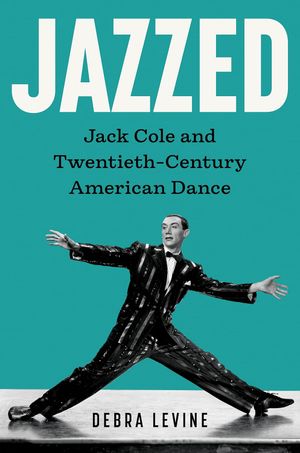
| Jazzed: Jack Cole and Twentieth-Century American Dance Renowned dancer and choreographer Jack Cole (1911–1974), whose birth name was John Ewing Richter, was a one-of-a-kind artist who initiated a gripping style of theatrical jazz dance that forever vanquished the vaudeville kickline. Cole's distinctive four-decade career choreographing for stage, screen, and his iconic nightclub act began during the Great Depression. He transformed early modern dance by injecting angularity, syncopation, and body isolations derived from Indian, Latin American, Af... |
 |
| Too Darn Hot: Kiss Me, Kate & the Making and Remaking of a Broadway Musical Traces the journey of Kiss Me, Kate, by Cole Porter, Sam and Bella Spewack, charting its development from concept to curtain call, a behind-the-scenes look at the artistic decisions that shaped its legacy. Through several case studies, Robbins examines how it has remained relevant, provocative, and beloved. 240 pages. |
 |
| Making Mary Poppins: The Sherman Brothers, Walt Disney, and the Creation of a Classic Film Making Mary Poppins reveals the extraordinary true story behind the creation of one of the most beloved films of all time―and the two little-known songwriters who helped make it possible. Long before Mary Poppins danced across the rooftops of Edwardian London and into the hearts of millions, Robert and Richard Sherman were struggling songwriters in Los Angeles, trying to find their voices―and their futures. In this vivid and deeply researched narrative, author and Disney historian Todd Ja... |
 |
| Orchestration in Musical Theatre An analytic and critical overview of the practice, execution, and effects of orchestration in musical theatre since the time that rock music became significant in the genre. Case studies from shows such as Hair, The Phantom of the Opera, The Lion King, Wicked, and Hamilton. 128 pages. |
 |
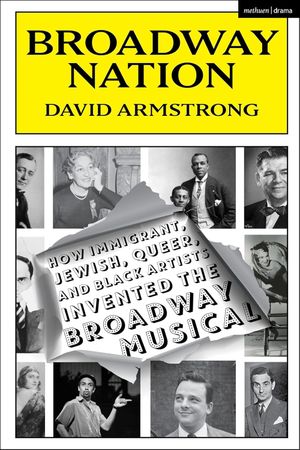
| Broadway Nation: How Immigrant, Jewish, Queer, and Black Artists invented the Broadway Musical Weaves these diverse threads into a comprehensive narrative, repositioning Black, Queer, and Women artists at the heart of the story, acknowledging their long-standing contributions often overlooked. 456 pages. |
 |
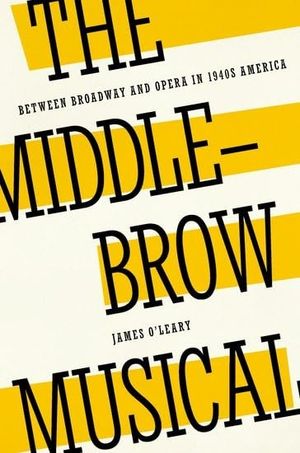
| The Middlebrow Musical: Between Broadway and Opera in 1940s America Uncovers critical networks that originally theorized a middlebrow approach to culture, beginning in the literary circles of Van Wyck Brooks and Archibald MacLeish, and radiating outward to major theater and music critics including Brooks Atkinson and Olin Downes. Follows three shows from their earliest conceptions to their opening-night reviews: Oklahoma!, Beggar's Holiday, and Street Scene. Featuring behind-the-scenes communications, which reveal how these Broadway writers explicitly deployed ... |
 |
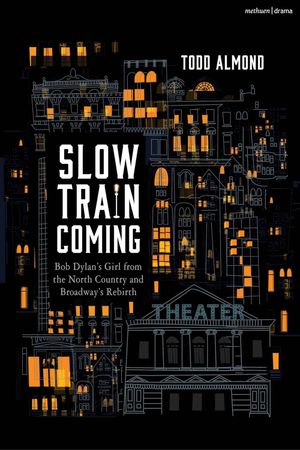
| Slow Train Coming: Bob Dylan’s Girl From the North Country and Broadway's Rebirth The journey of a musical from potential disaster to success, and the Broadway industry that managed to stay alive during the pandemic shutdown of 2020-22. Told through personal stories, anecdotes from the cast, production shots, behind-the-scenes photos, and insights from the creators. 280 pages. |
 |
| Women Writing Musicals: The Legacy That the History Books Left Out Tells the stories of over 300 inspiring women who wrote Broadway and Off-Broadway musicals that Publishers Weekly calls "an exhaustive tribute to women whose contributions to Broadway musical history have often been overlooked." Covers prolific and celebrated Broadway writers like Betty Comden and Jeanine Tesori, women who have written musicals but gained fame elsewhere like Dolly Parton and Sara Bareilles, and dramatists you’ve never heard of—but definitely should have. 408 pages. |
 |
| How Sondheim Can Change Your Life Author Richard Schloch makes the case that Sondheim's greatness–beyond the clever lyrics and adventurous music–rests in his ability to tell stories that relate to us all. From Louise's desire for freedom to Sweeney Todd's thirst for revenge, we as an audience relate easily to Sondheim's characters. Follows the arc of Sondheim's career and includes stories about productions and iconic performers, deep readings of his music and lyrics, and insights into his creative process. 304 pages. |
 |
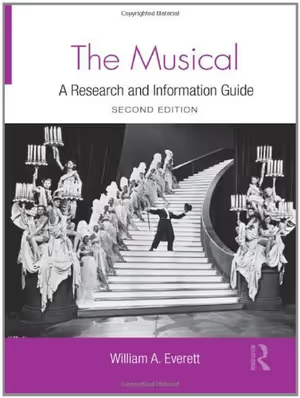
| The Musical: A Research and Information Guide (Routledge Music Bibliographies) 2nd Edition 2nd edition of 2011 book by William Everett. More than 1,400 annotated entries; includes reference works, monographs, articles, anthologies, and websites related to the musical. Separate sections devoted to sub-genres (such as operetta and megamusical), non-English language musical genres in the U.S., traditions outside the U.S., individual shows, creators, performers, and performance. This second edition reflects the notable increase in musical theater scholarship since 2000. Also includes mul... |
 |
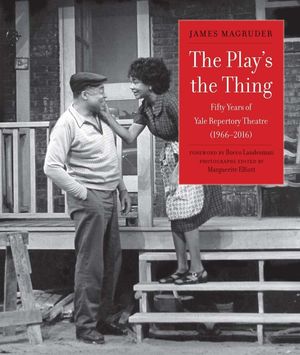
| The Play's the Thing: Fifty Years of Yale Repertory Theatre (1966-2016) Each of four chapters is dedicated to one of the Yale Rep's artistic directors to date: Robert Brustein, Lloyd Richards, Stan Wojewodski Jr., and James Bundy. Numerous sidebars are dedicated to the spaces used by the theater, the playwrights produced most often, casting, the prop shop, the costume shop, artist housing, and other topics. Illustrated. Based in part on interviews with some of America’s most respected actors about their experiences at the Rep. 400 pages. |
 |
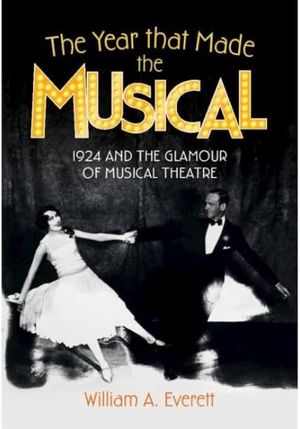
| The Year that Made the Musical: 1924 and the Glamour of Musical Theatre About the remarkable mid-Roaring Twenties stagecraft to have been truly transnational, with a stellar cast of producers, performers and creators boldly experimenting worldwide. Revues, musical comedies, zarzuelas and operettas formed part of a thriving theatrical ecosystem, with many works - and their leading artists - now unpredictably defying genres. Demonstrates how fresh approaches became highly successful, with established leads like Marie Tempest and Fred Stone appearing in new production... |
 |
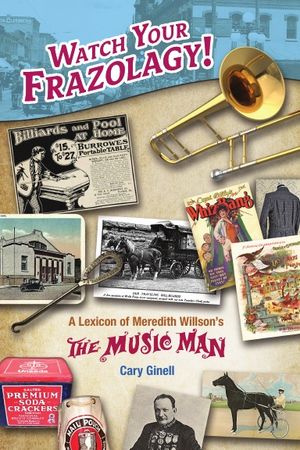
| Watch Your Frazolagy! A Lexicon of Meredith Willson's "The Music Man" By Cary Ginell, who analyzes over 280 period references to language, slang, commodities, household items, idiomatic expressions, and personages familiar to Iowans in 1912 that Willson incorporated into the libretto and song lyrics. Includes over 125 images to help readers visualize the items and personages mentioned in the show. 155 pages. |
 |
| Say It with a Beautiful Song: The Art and Craft of the Great American Songbook Looks at the Great American Songbook's craft and its mastery through essential elements of the beloved songs, investigating the qualities that make the songbook a unique staple of American culture. With anecdotes, each chapter looks at a variety of songs thematically and dives into the lives of songwriters. 210 pages. |
 |
| Ballplayers on Stage: Baseball, Melodrama, and Theatrical Celebrity in the Deadball Era Explores the relationship between professional baseball and professional theater in the late nineteenth and early twentieth centuries. Examines case studies of five representative players from baseball's pre–Babe Ruth “deadball” era: Cap Anson, Mike “King” Kelly, Christy Mathewson, Ty Cobb, and Rube Waddell, with a concluding study of Babe Ruth himself. A historical study of baseball, theater, and the relationship between the two ... also shares insight into the creation of celebrity ... |
 |
| A Sense of Theatre: The Untold Stories of the Creation of Britain's National Theatre By Richard Pilbrow (British pioneer of stage lighting; appointed by Sir Laurence Olivier to help create the National Theatre of Great Britain as a member of the building committee). An eye-witness account of the birth and subsequent triumph of one of the world's most famous theatres. The theatre architecture has challenged generations of theatre makers, leading to innovation that has changed theatre worldwide. With insight from leading players in British theatre and the minutes of the deliberat... |
 |
| Closer than Ever: The Unique Six-Decade Songwriting Partnership of Richard Maltby Jr. and David Shire Chronicles the sixty-six-year (and counting) partnership of Richard Maltby Jr. and David Shire, with behind-the-scenes accounts of their musicals interspersed with analyses of standout individual numbers. 304 pages. |
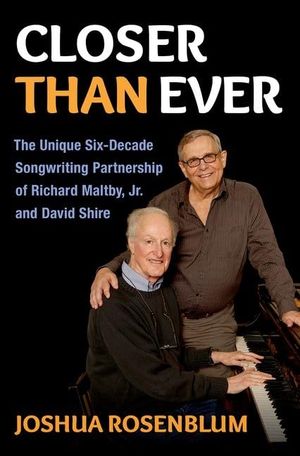 |
| Yankee Doodle Dandy: George M. Cohan and the Broadway Stage Part of the Broadway Legacies series. In the first book on Cohan in fifty years, Craft situates Cohan as a central figure of his day. Examining his multifaceted contributions and the various sociocultural identities he came to embody, Craft shows how Cohan and his works indelibly shaped the American cultural landscape. 288 pages. |
|
| The Group Theatre: An Enduring Legacy . Examines the history and influence of the Group Theatre, which presented the first plays of Clifford Odets, Sidney Kingsley, and William Saroyan, and launched the careers of Franchot Tone, John Garfield, Elia Kazan, Lee J. Cobb, Karl Malden, Martin Ritt, and Luther Adler. 339 pages. |
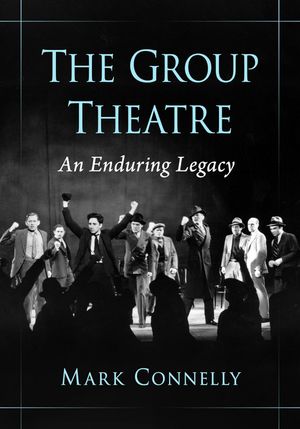 |
| The Irish Repertory Theatre: Celebrating Thirty-Five Years Off-Broadway History of the multi-award winning Off-Broadway Irish Repertory Theatre Company, from its beginning in 1988 to its thirty-fifth season in 2023. Considers how the Irish Rep's plays and musicals reflect the Irish diaspora, the relationship between Ireland and America, and what it means to be Irish and Irish American, both historically, and in the twenty-first century. 185 pages. |
 |
| Theatre Work: Reimagining the Labor of Theatrical Production "investigates both the history and current realities of life and work in professional theatrical production in the United States and explores labor practices that are equitable, accessible, and sustainable." 352 pages. |
 |
| Playhouse Square and the Cleveland Renaissance In-depth account of Cleveland's Playhouse Square (originally the State, Ohio, Hanna, Allen, and Palace theaters) history, beginning with the 1921 opening, through the darkening of four of their marquees by the end of the 1960s, the renovation and renaissance from the 1970s, and the effects of the COVID-19 pandemic. Illustrated and featuring interviews with the central figures involved in saving the Square. 240 pages. |
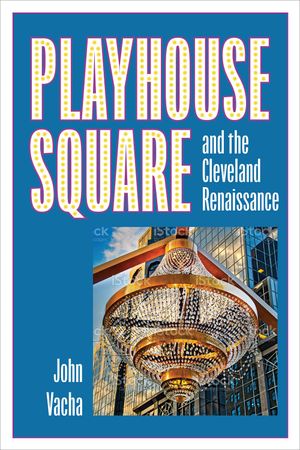 |
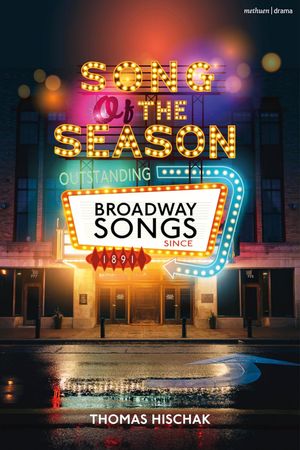
| Song of the Season: Outstanding Broadway Songs since 1891 Charts the progress of American showtunes alongside popular music forms as songs evolved from the waltz and ragtime to jazz, rock, rap and hip-hop. Factual analysis and historical context combine to offer a rich picture of the American songbook from Irving Berlin to Elton John. 440 pages. |
 |
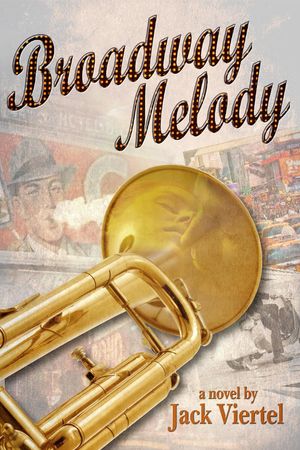
| Broadway Melody A show business romance crossing 7000 miles and 70 years, Broadway Melody lands securely in the confines of Times Square and the Theater District, as a crackerjack trumpet player and a blue-collar spotlight operator vie for the love of an aspiring ingenue who holds them both in thrall for their entire lifetimes. Filled with theater lore and history, vivid characters both real and imagined, and a great number of songs in its heart, this novel delivers the ultimate valentine to Broadway then and n... |
 |
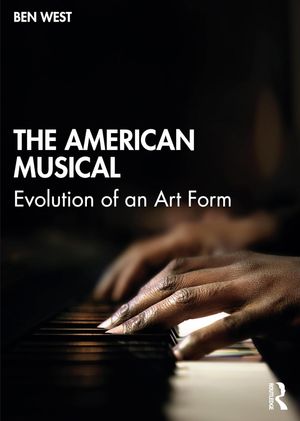
| The American Musical: Evolution of an Art Form A portrait of the American musical's artistic evolution over the course of seven distinct, newly defined eras, with a perspective gleaned from research at more than twenty different archives across the United States. 416 pages. |
 |
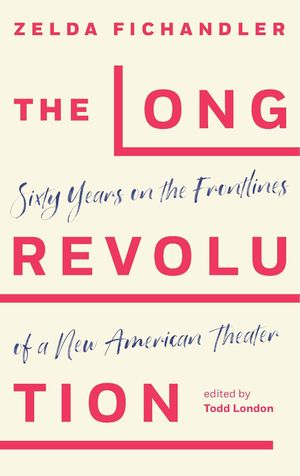
| The Long Revolution: Sixty Years on the Frontlines of a New American Theater Content from sixty years of essays, speeches, and manifestos by the founding mother of the resident professional theatre movement. Founder and artistic director of Arena Stage in Washington, D.C., and chair of New York University’s Graduate Acting program. Gathers Fichandler’s most prescient writing about that movement, ranging over such topics as The Institution as Art-Work, the Profit in NonProfit, Race and a Deepening Aesthetic, and Creativity and the Public Mind. Also includes intimate ... |
 |
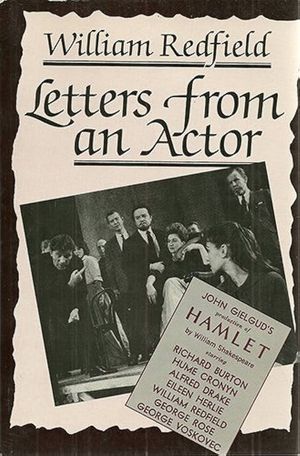
| Letters from an Actor: Anniversary Edition Foreword by Sam Mendes. Afterword by Adam Redfield. William Redfield's (Guildenstern) series of letters describing the daily happenings and his impressions of them during the three months of preparation for the 1964 Hamlet, from rehearsals through out-of-town tryouts to the gala opening night on Broadway. New edition brings Redfield's classic back into print, as The Motive and the Cue, the Sam Mendes-directed play about the Gielgud production that is based in part on the book, continues its run... |
 |
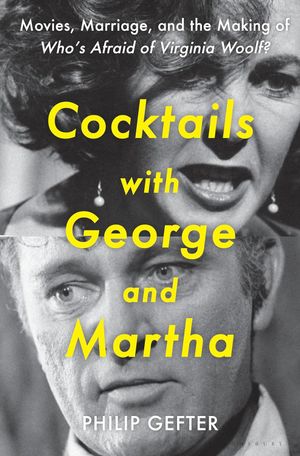
| Cocktails with George and Martha: Movies, Marriage, and the Making of Who's Afraid of Virginia Woolf? The author traces Edward Albee's Who's Afraid of Virginia Woolf? from its origins in Greenwich Village's bohemian enclave, through its tormented production process, to its explosion onto screens across America and a permanent place in the canon of cinematic marriages. 368 pages. |
 |
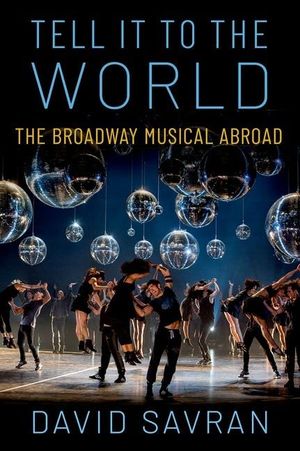
| Tell it to the World: The Broadway Musical Abroad A look at how the Broadway musical travels the world, influencing and even transforming local practices and traditions. Focuses on recent musicals but also looks back through the twentieth century to plot the evolution of musical theatre in South Korea and Germany. 312 pages. |
 |
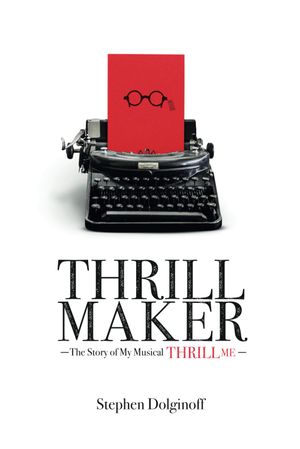
| Thrill Maker: The Story of My Musical "Thrill Me" The author looks back over the last 30 years and writes about how his musical Thrill Me: The Leopold & Loeb Story became a Drama Desk and Outer Critics Circle Award nominee and went on to have over two hundred productions spanning twenty-five countries and seventeen languages. 312 pages. |
 |
| Mary & Ethel ... and Mikey Who? By Stephen Cole, who has "taken his real-life friendships with Ethel Merman and Mary Martin, the two undisputed queens of Broadway, tossed them into a blender and come up with a fantasy about a nerdy super-fan in the early 1980s who, while visiting his dying idol Ethel Merman, stumbles into a time portal in her closet and exits on the other side in Sophie Tucker's star dressing room at the Imperial Theatre in 1939." 216 pages. |
 |
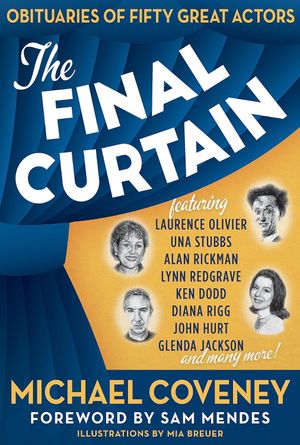
| The Final Curtain: Obituaries of Fifty Great Actors Fifty articles (from the the Guardian, the Observer, the Financial Times, and the Evening Standard) arranged in chronological order of each actor’s demise, constituting a vivid history of postwar theatre through the lives of the actors. There are happy/sad juxtapositions of shooting stars Robert Stephens and Alan Bates; tragic niece and aunt, Natasha Richardson and Lynn Redgrave; classical queens Diana Rigg and Barbara Jefford; and versatile showtime hoofers Una Stubbs and Lionel Blair. 256 p... |
 |
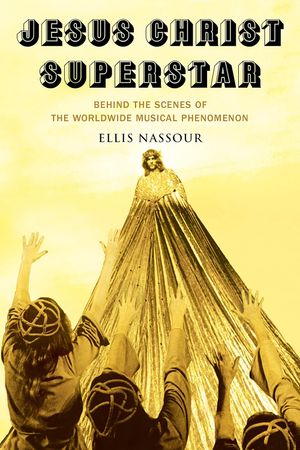
| Jesus Christ Superstar: Behind the Scenes of the Worldwide Musical Phenomenon Detailed account of the life of the musical from 1969–1973. Behind the scenes look at the evolution of Jesus Christ Superstar from an album to a Broadway musical, exploring the breakthroughs, the frustrations, and the pitfalls. Never-before-seen photos and new interviews. 232 pages. |
 |
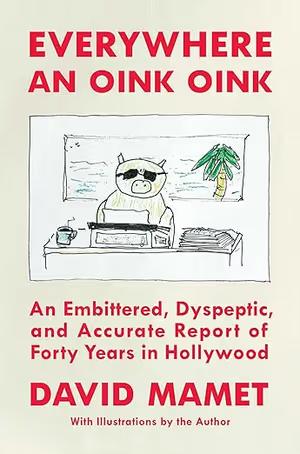
| Everywhere an Oink Oink: An Embittered, Dyspeptic, and Accurate Report of Forty Years in Hollywood By David Mamet, with illustrations by David Mamet. The author " shares scandalous and laugh-out-loud tales from his four decades in Hollywood where he worked with some of the biggest names in movies." Audiobook narrated by Jim Frangione. 256 pages. |
 |
| Fifty Key Theatre Designers By Arnold Aronson. Looks at the history of theatrical scenography by examining the work and contributions of fifty set, costume, lighting, and projection designers since the Renaissance ... including opera, dance, Broadway and West End commercial theatre, avant-garde performance, and even Olympic spectacles. Each chapter features one designer, with basic biographical information and a discussion of that artist's style, aesthetics, and contributions. 330 pages. |
 |
| Failure, Fascism, and Teachers in American Theatre: Pedagogy of the Oppressors Explores the shifting representations of schoolteachers and professors in plays and performances primarily from the twentieth and twenty-first centuries in the United States. Examining various historical and recurring types, such as spinsters, schoolmarms, presumed sexual deviants, radicals and communists, fascists, and emasculated men teachers, the author shines the spotlight on both well-known and nearly-forgotten plays. 230 pages. |
 |
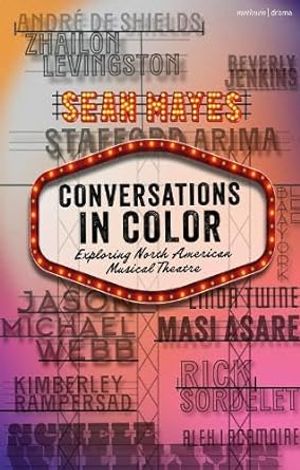
| Conversations in Color: Exploring North American Musical Theatre By Sean Mayes. Unveils the untold stories and perspectives of artists of color shaping the stage today, through interviews drawn from Broadway and regional productions, including André De Shields, Alex Lacamoire, Baayork Lee, and many more. 168 pages. |
 |
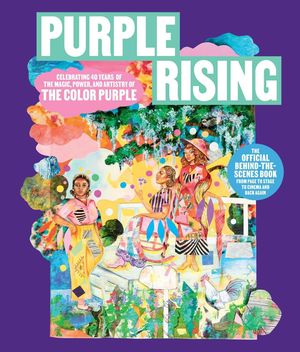
| Purple Rising: Celebrating 40 Years of the Magic, Power, and Artistry of The Color Purple To celebrate the 40th anniversary of the Pulitzer Prize–winning masterpiece "The Color Purple," as well as the acclaimed 1985 film from Steven Spielberg, the Tony-winning Broadway musical, and the all-new film adaptation. An exploration of the novel’s enduring legacy, featuring contributions from Alice Walker, Oprah Winfrey, Steven Spielberg, Colman Domingo, Fantasia Barrino, Danny Glover, and more. Oral histories and fresh anecdotes based on more than fifty original interviews, as well as ... |
 |
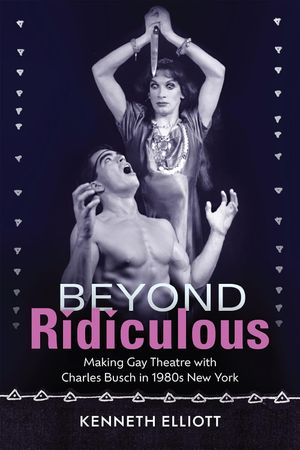
| Beyond Ridiculous: Making Gay Theatre with Charles Busch in 1980s New York Tells the story of Theatre-in-Limbo, a downtown band of actors formed in 1984 by director Kenneth Elliott and playwright and drag legend Charles Busch. Elliott narrates the company's Cinderella tale of fun, heartbreak, and dishy drama. 226 pages. |
 |
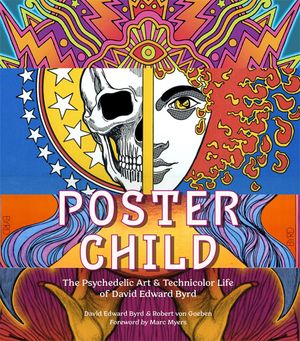
| Poster Child: The Psychedelic Art & Technicolor Life of David Edward Byrd Graphic artist David Edward Byrd pioneered the iconic visual styles that have come to define rock 'n' roll graphics through his poster, concert, and album art designs. He also created the iconic imagery for many Broadway shows, including Follies, Godspell, Jesus Christ Superstar, Little Shop of Horrors, and more. 176 pages. |
 |
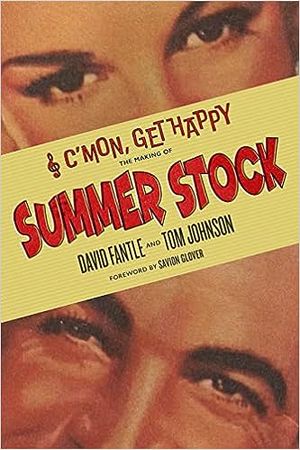
| C'mon, Get Happy: The Making of Summer Stock A comprehensive study of this 1950 motion picture, from start to finish and after its release. The authors discuss in detail the contributions of the cast (which included Gloria DeHaven, Eddie Bracken, Phil Silvers, and Marjorie Main), the director (Charles Walters), the producer (Joe Pasternak), the script writers (George Wells and Sy Gomberg), the songwriters (which included Harry Warren and Mack Gordon), and top MGM executives (Louis B. Mayer and Dore Schary). Features extensive interviews, ... |
 |
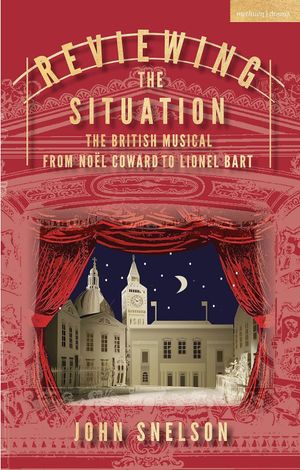
| Reviewing the Situation: the British Musical from Noël Coward to Lionel Bart Traces what made shows like Oliver!, Me and My Girl, The Dancing Years, Bless the Bride and Expresso Bongo successes in the West End and how their qualities define a uniquely British interpretation of the genre. Detailed case studies, such as The Boy Friend and Bitter Sweet. 208 pages. Released 10/5/23. |
 |
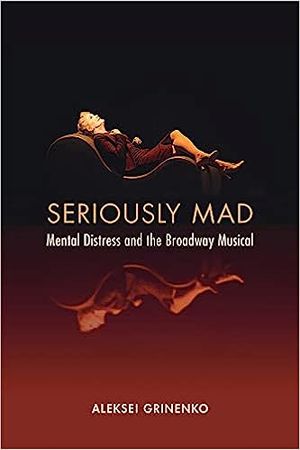
| Seriously Mad: Mental Distress and the Broadway Musical An account of stage musicals' engagement with historically significant theories about mental distress, illness, disability, and human variance in the United States. Shows how theater dramatized serious medical conditions and social problems. Among the many Broadway productions discussed are Next to Normal, A Strange Loop, Sweeney Todd, Man of La Mancha, Dear World, Anyone Can Whistle, Gypsy, Oklahoma!, and Lady in the Dark. |
 |
| Backstage: Portraits of Actors at Work in the Theatre Series of photographs by Simon Annand behind the scenes in London theaters, capturing actors before they go on stage. Foreword by Cate Blanchett. 256 pages. |
 |
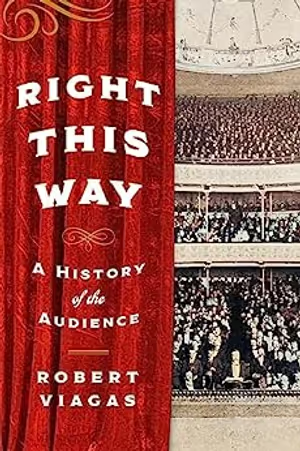
| Right This Way: A History of the Audience Pop history of audiences through the ages. Walks us through the different types of audiences and the history of their changing behaviors, what science has to say about how our brains respond to what we experience, how technology will continue to shape audiences, and why, during COVID-19, people risked a deadly virus to be part of a crowd. Drawing on perspectives from critics, performers, scholars, and many others. 256 pages. |
 |
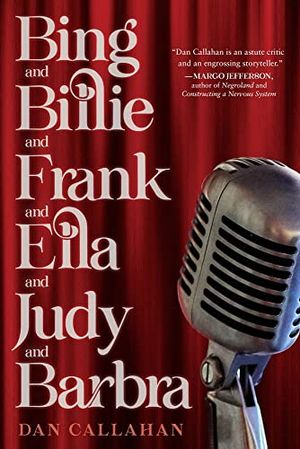
| Bing and Billie and Frank and Ella and Judy and Barbra Interlocking story of the lives and careers American songbook interpreters Bing Crosby, Billie Holiday, Frank Sinatra, Ella Fitzgerald, Judy Garland, and Barbra Streisand. 384 pages. |
 |
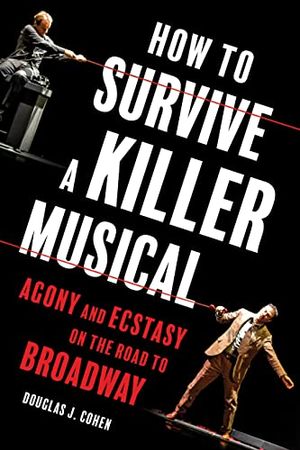
| How to Survive a Killer Musical: Agony and Ecstasy on the Road to Broadway Chronicles Cohen's decade-long quest to bring No Way to Treat a Lady to the stage–writing, re-writing, and shepherding it across the US and Europe amidst all manner of adversity and plain rotten luck. A portrait of passion, persistence, and resilience. Cast of characters includes an Oscar-winning screenwriter who invites Cohen to his personal screening room for a marathon midnight writing session; a Tony Award-winning director making his comeback after a horrific accident renders him a quadri... |
 |
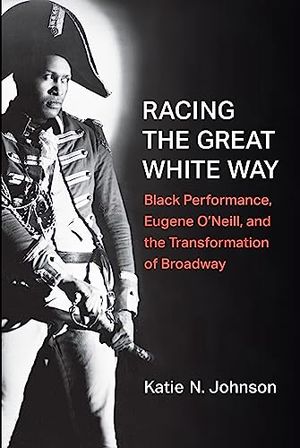
| Racing the Great White Way: Black Performance, Eugene O’Neill, and the Transformation of Broadway The early drama of Eugene O’Neill, with its emphasis on racial themes and conflicts, opened up extraordinary opportunities for Black performers to challenge racist structures in modern theater and cinema. By adapting O’Neill’s dramatic writing—changing scripts to omit offensive epithets, inserting African American music and dance, or including citations of Black internationalism--theater artists of color have used O’Neill’s texts to raze barriers in American and transatlantic theate... |
 |
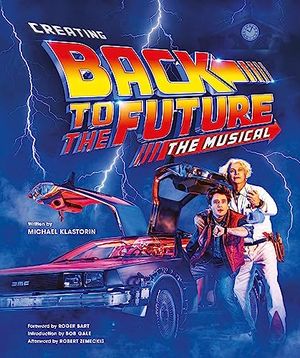
| Creating Back to the Future: The Musical About the creation of the musical that opened at the Manchester Opera House in February 2020, music and lyrics by Alan Silvestri and Glen Ballard and a book by Robert Zemeckis and Bob Gale (adapted from their original screenplay). Pairs exclusive, in-depth interviews with previously unpublished photography; excerpts from Bob Gale's personal journal; and a foreword by Gale to reveal and detail the years long process, and the creative ingenuity and technical innovation. 224 pages. |
 |
| When the British Musical Ruled the World Gives his account of how Evita, Cats, Starlight Express, Les Misérables, The Phantom of the Opera, Chess, and Miss Saigon changed the business of musical theater in the 1980s. With insightful, personal stories from cast members, set designers, musical supervisors, dancers, lighting designers, production managers, singers, and choreographers ... and the backstage drama, production nightmares, and financial woes that threatened to derail the shows at multiple points. 268 pages. |
 |
| Gays on Broadway Chronological review of the long journey to bring the culture of gay men and women onto the American stage. From the genteel female impersonators of the 1910s to the raucous drag queens of La Cage aux Folles, from the men of The Normal Heart to the women of Fun Home, and from Eva Le Gallienne and Tallulah Bankhead to Tennessee Williams and Nathan Lane .. chronicles the plays and people that brought gay culture to Broadway. 240 pages. |
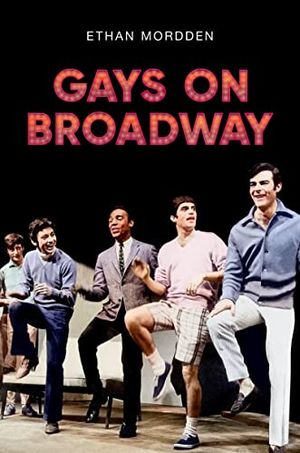 |
| Dance on the American Musical Theatre Stage: A History Chronicles the development of dance, with an emphasis on musicals and the Broadway stage, in the United States from its colonial beginnings to performances of the present day. 304 pages. |
 |
| Cinderellas of West 53rd Street: Stories from the Legendary Rehearsal Club Foreword by Blythe Danner. National network of Rehearsal Club "Cinderellas" (coined by TV Guide in the 1950s) came together to tell their stories, spanning four decades, 1940s - 1970s. Captures New York City and Broadway history while charting the journey leading to The Rehearsal Club's incorporation in 2019. Carol Burnett, Blythe Danner and others are recognizable, well-known RC Alums. 264 pages. Hardcover released 4/15/23. Audiobook on CD and Audible Audiobook with bonus materials to be relea... |
 |
| Theatre Spaces 1920-2020: Finding the Fun in Functionalism Lavishly illustrated hands-on account of the creation of new theatre spaces spanning a century. A compelling history that is part memoir, part impassioned call to rethink the design of our theatre spaces and the future of live theatre. 256 pages. |
 |
| Blanche: The Life and Times of Tennessee Williams's Greatest Creation An exploration of the cultural impact of Blanche DuBois, examining Tennessee Williams's most enduring creation through the performances of seven brilliant actresses who have taken on the role: Jessica Tandy, Vivien Leigh, Ann-Margret, Jessica Lange, Patricia Clarkson, Cate Blanchett, and Jemier Jackson. Exploring themes of womanhood, sexuality, mental illness, and the idealized South, Blanche is an engrossing cultural history of a rich and complex character that sheds light on who we are. Photo... |
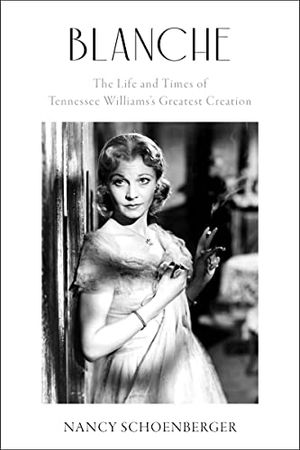 |
| Careful the Spell You Cast: How Stephen Sondheim Extended the Range of the American Musical . "... argues that Sondheim firmly belongs to the Broadway aspirational tradition, in that many of his characters are defined by their dreams: to abandon one's dream (as Ben does in Follies, Frank does in Merrily We Roll Along, and Addison does in Road Show) is to lose one's soul. 192 pages. |
 |
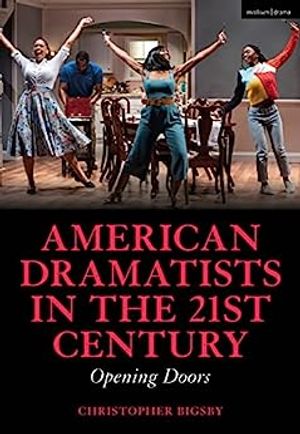
| American Dramatists in the 21st Century: Opening Doors Examines the careers of seven award-winning playwrights: David Adjmi, Julia Cho, Jackie Sibblies Drury, Will Eno, Martyna Majok, Dominique Morisseau and Anna Ziegler. Covering all their plays, including several as yet unpublished, nothing their critical reception while drawing on their own commentary on their approach to writing and the business of developing a career. 256 pages. |
 |
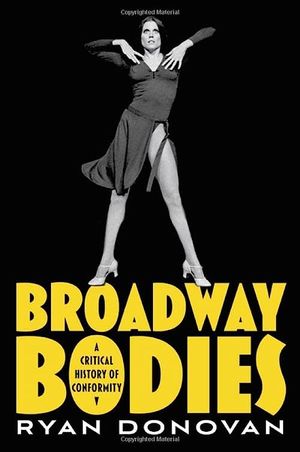
| Broadway Bodies: A Critical History of Conformity Explores how ability, sexuality, and size intersect with gender, race, and ethnicity in casting and performance. Asks/answers "Why did A Chorus Line, a show that sought to individuate dancers, inevitably make them indistinguishable? How does the use of fat suits in musicals like Dreamgirls and Hairspray stigmatize fatness? What were the political implications of casting two straight actors as the gay couple in La Cage aux Folles in 1983? How did deaf actors change the sound of musicals in Deaf ... |
 |
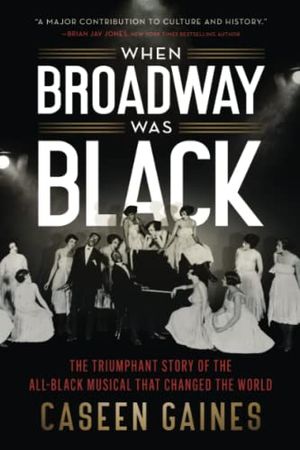
| When Broadway Was Black: The Triumphant Story of the All-Black Musical that Changed the World In-depth look into the rise of the 1921 Broadway hit, Shuffle Along, the first all-Black musical to succeed on Broadway, with a score by Noble Sissle and Eubie Blake. Book by F. E. Miller and Aubrey Lyles. The story of how Sissle and Blake, along with comedians Flournoy Miller and Aubrey Lyles, overcame poverty, racism, and violence to harness the energy of the Harlem Renaissance. 512 pages. |
 |
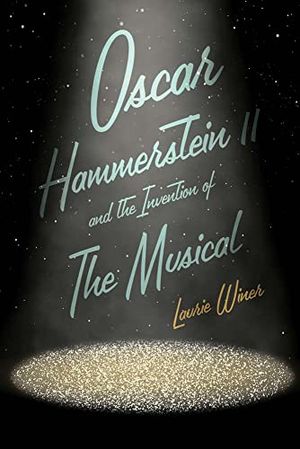
| Oscar Hammerstein II and the Invention of the Musical "Diving deep into Hammerstein’s life, examining his papers and his lyrics, critic Laurie Winer shows how he orchestrated a collective reimagining of America, urging it forward with a subtly progressive vision of the relationship between country and city, rich and poor, America and the rest of the world. His rejection of bitterness, his openness to strangers, and his optimistic humor shaped not only the musical but the American dream itself. His vision can continue to be a touchstone to this d... |
 |
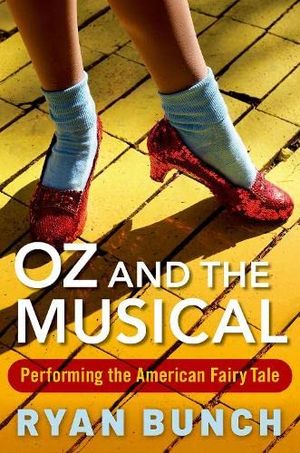
| Oz and the Musical: Performing the American Fairy Tale "The Wonderful Wizard of Oz" (1900) by Frank L. Baum has served as the basis for some of the most popular musicals on stage and screen. Show by show, Bunch highlights the forms and conventions of musical work as practiced in its time and context–such as the turn-of-the-century extravaganza, the classical Hollywood film musical, the Black Broadway musical of the 1970s, and the twenty-first-century mega-musical. He then shows how the journey of each show teaches participants and audiences somet... |
 |
| Finale: Late Conversations with Stephen Sondheim Personal collection of interviews with the late Stephen Sondheim, conducted in the last years of the artist's life (unedited from the February 22 New Yorker article). Audio versions narrated by Christopher Grove and Keith Sellon-Wright. 240 pages. |
 |
| There's a Body in the Window Seat!: The History of Arsenic and Old Lace Detailed history of one of the most beloved American murder-mysteries and comedies, Joseph Kesselring's Arsenic and Old Lace. Follows the actors, both on the stage and on the screen, as they handle the demands of the roles and behind-the-scenes relationships. 168 pages. |
 |
| Magic To Do: Pippin's Fantastic, Fraught Journey to Broadway and Beyond Celebrating the 50th anniversary of Pippin. Dives deep into the legendary clashes, backstage drama, and incredible artistic synergy. An examination of the creative struggles between Pippin's director/choreographer, the iconic Bob Fosse, and Stephen Schwartz. |
 |
| Anne Frank & Emmett Till: Why I Wrote the Play Anne & Emmett By Janet Langhart Cohen, who wrote the play Anne & Emmett, which has been performed across the U.S. since 2007 (the play is also being published in paperback and Kindle format). An effort to reveal how some of the people the author has known and the seminal events she experienced enabled her to link together, in an imaginary conversation, the seemingly disparate lives of Anne Frank and Emmett Till, two iconic figures who were murdered by societies that couldnt protect them. |
 |
| Carefully Taught: American History through Broadway Musicals Looks at American history as depicted in forty Broadway musicals. Categories include: biographies of famous Americans, (Andrew Jackson and Fiorello LaGuardia), stories with national conflicts (Hamilton, South Pacific), events that captured the attention of the American public (Floyd Collins, Newsies), and sociological studies or satires of specific eras (The Music Man, Hair). Approaches American history from two vantage points: the point of view of the playwright and composer accompanied with t... |
 |
| Good Morning, Olive: Haunted Theatres of Broadway and Beyond Good Morning, Olive (named for one of the most beautiful and temperamental of Broadway's ghosts) is about the ghosts that haunt theatres in New York and around the world. 288 pages. |
 |
| Miracle of The Music Man: The Classic American Story of Meredith Willson The author brings to life the origins of this classic show, the music behind it, and the unlikely story of its creator. Interweaving behind-the-scenes accounts of people who worked with Willson, Cabaniss looks at his long and unusual career as a composer, conductor, radio personality, and flutist. 208 pages. |
 |
| Attack of the Monster Musical: A Cultural History of Little Shop of Horrors Chronicles the unlikely phenomenon of Little Shop of Horrors, the musical by Howard Ashman and Alan Menken. Looks at the creation of the musical and its place in the contemporary musical theatre canon and examines its afterlives and wider cultural context. Told through archival research and eyewitness accounts, with extensive use of Ashman's personal papers, offering a unique and inspiring study of one of musical theatre's greatest talents. 256 pages. |
 |
| Everything Was Possible: The Birth of the Musical Follies (revised and updated) Insider's view of Stephen Sondheim and James Goldman's musical, Follies. New afterword brings the history of the show forward, diving into recent productions around the world, new recordings, and the continued promise of a film version. |
 |
| Scene Shift: U.S. Set Designers in Conversation Showcases contemporary U.S. set design by engaging designers with one another, pairing dialogue and imagery from varied experiences and practices. The conversations include designers (30 in all) who are commercially successful, artistically successful, and those who have existed on the fringes of the theatre world whose work is not necessarily definable, and therefore not as visible. 268 pages. |
 |
| Made-Up Asians: Yellowface During the Exclusion Era Traces the development of yellowface in the U.S. context during the Exclusion Era (1862–1940), when Asians faced legal and cultural exclusion from immigration and citizenship. Examines a wide-ranging set of primary sources, including makeup guidebooks, play catalogs, advertisements, biographies, and backstage anecdotes, providing new ways of understanding and categorizing yellowface as theatrical practice and historical subject. 296 pages. |
 |
| The Complete Book of 1900s Broadway Musicals Surveys every single book musical that opened during the decade. Each musical has its own entry which features: Plot summary; cast members; creative team; song lists; opening and closing dates; number of performances; critical commentary; film adaptations, recordings, and published scripts, when applicable. Numerous appendixes include a chronology of book musicals by season; chronology of revues; chronology of revivals of Gilbert and Sullivan operettas; a selected discography; filmography; publ... |
 |
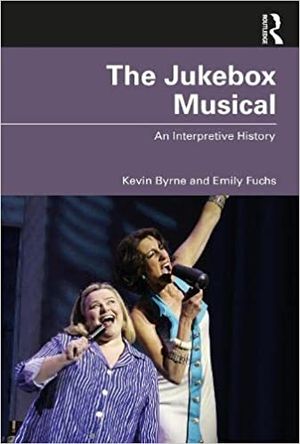
| The Jukebox Musical: An Interpretive History Comprehensive guide to the unique genre of the jukebox musical, delving into its history to explain why these musicals have quickly become beloved for multiple generations of theatergoers and practitioners. |
 |
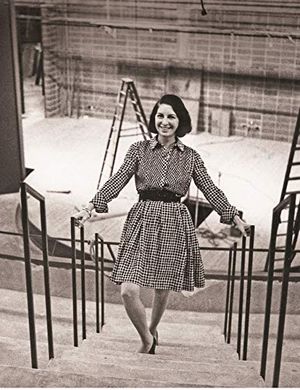
| The Long Revolution: Writings from the Frontlines of a New American Theatre Gathers sixty years of essays, speeches, and manifestos by the founding mother of the resident professional theatre movement. Topics such as: The Institution as Art-Work, the Profit in NonProfit, Race and a Deepening Aesthetic, and Creativity and the Public Mind. Also includes intimate portraits of artists with whom Fichandler frequently collaborated and director's notes from the major productions that defined her vision. 320 pages |
 |
| Deep Are the Roots: Trailblazers Who Changed Black British Theatre Celebrates the pioneers of Black British theatre, beginning in 1825, when Ira Aldridge made history as the first Black actor to play Shakespeare's Othello in the United Kingdom, and ending in 1975 with the success of Britain’s first Black-led theatre company. |
 |
| Offstage Observations: Inside Tales of the Not-So-Legitimate Theatre The author introduces Broadway, once upon a time ... taking the reader through a decade's worth of adventures, working his way from a menial pencil sharpener for producer David Merrick toward a career as a full-fledged manager, producer, and drama critic. The book follows the author's progress from the wintry night after his sixteenth birthday, when he unexpectedly finds himself alone on the empty stage of a Broadway theatre, peering out at the silent, empty auditorium lit only by a solitary gh... |
 |
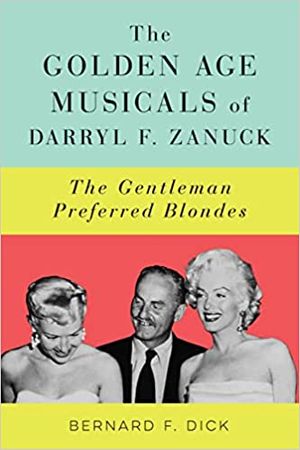
| The Golden Age Musicals of Darryl F. Zanuck: The Gentleman Preferred Blondes First book devoted to the musicals that Darryl F. Zanuck produced at Warner Bros., Twentieth Century Pictures, and Twentieth Century Fox. Spotlights how he placed his personal imprint on the genre and how he nurtured and showcased several blonde female stars who headlined the musicals, including Shirley Temple, Alice Faye, Betty Grable, Vivian Blaine, June Haver, Marilyn Monroe, and Sheree North. 320 pages. |
 |
| The Abbott Touch: Pal Joey, Damn Yankees, and the Theatre of George Abbott In-depth and original study of actor, playwright, director, librettist, play doctor, and producer George Abbott, examining 100 productions. Each chapter examines a period of creativity in his life. 272 pages. |
 |
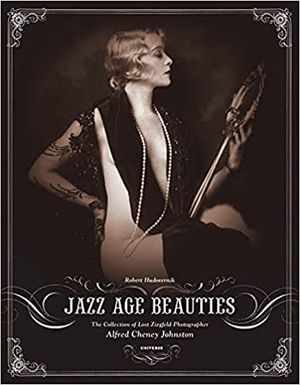
| Jazz Age Beauties: The Lost Collection of Ziegfeld Photographer Alfred Cheney Johnston More than 200 publicity stills and photos of some of America's first "It" girls—silent film-era starlets. Accompanying these iconic images are the stories behind them, including accounts from surviving Ziegfeld Girls, as well as ads featuring them. |
 |
| West Side Story, Gypsy, and the Art of Broadway Orchestration Routledge Research in Music series. Draws on extensive archival research with original manuscripts to provide a detailed account of the process of orchestration for West Side Story and Gypsy, and their context in the history of Broadway orchestration. Breaking down how the two composers, Leonard Bernstein and Jules Styne, collaborated with orchestrators Sid Ramin, Irwin Kostal, and Robert Ginzler to better understand both these two iconic shows and the importance of orchestration within musical... |
 |
| Everything is Choreography: The Musical Theater of Tommy Tune Broadway Legacies series. First full scale book about the career of the director-choreographer Tommy Tune (Grand Hotel, My One and Only, Nine, The Best Little Whorehouse in Texas, A Day in Hollywood/A Night in the Ukraine, The Will Rogers Follies). "Celebrates and examines with a critical eye his major projects, and summons for readers a glorious period of dance, performance, and theatrical imagination." 288 pages. |
 |
| Making Broadway Dance Examines choreography for musical theatre through the lens of dance studies, script analysis, movement research and dramaturgical inquiry ... the choreographic systems of some of Broadway's most influential dance-makers including George Balanchine, Agnes de Mille, Jerome Robbins, Katherine Dunham, Bob Fosse, Savion Glover, Sergio Trujillo, Steven Hoggett and Camille Brown. 232 pages. |
 |
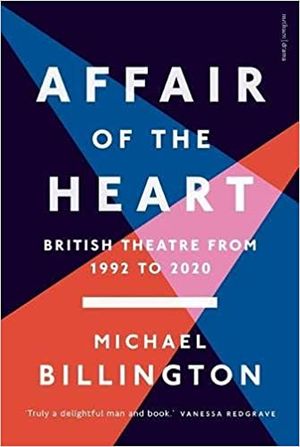
| Affair of the Heart: British Theatre from 1992 to 2020 Selected theatre reviews from 1992 to 2020 ... starting each chapter is a brief commentary on the developments of that era and the social, political and cultural context within which this theatre was being produced. Also included are key obituaries and letters in response to reviews written. |
 |
| A History of the Theatre Costume Business: Creators of Character Comprehensive book on the subject, as related by award-winning actors and designers, and firsthand by the drapers, tailors, and craftspeople who make the clothes that dazzle on stage. ".. shows that there is as much drama behind the scenes as there is in the performance: famous actors relate their intimate experiences in the fitting room, the glories of gorgeous costumes, and the mortification when things go wrong, while the costume makers explain how famous shows were created with toil, tears,... |
 |
| Working Backstage: A Cultural History and Ethnography of Technical Theater Labor Illuminates the work of New York City's theater technicians, shining a light on the essential contributions of unionized stagehands, carpenters, electricians, sound engineers, properties artisans, wardrobe crews, makeup artists, and child guardians. Based on the author's (a former theater technician herself) archival research and interviews with more than 100 backstage technicians, members of the New York locals of the International Alliance of Theatrical Stage Employees. |
 |
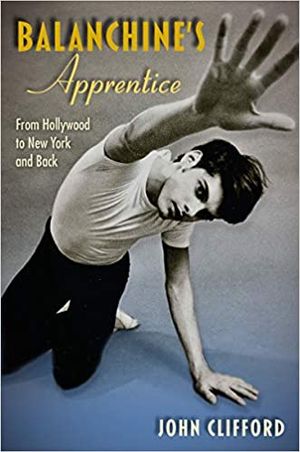
| Balanchine’s Apprentice In this long-awaited memoir, dancer and choreographer John Clifford offers a highly personal look inside the day-to-day operations of the New York City Ballet and its creative mastermind, George Balanchine. Balanchine’s Apprentice is the story of Clifford―an exceptionally talented artist―and the guiding inspiration for his life’s work in dance. |
 |
| Shakespearean When Robert McCrum began his recovery from a life-changing stroke, described in My Year Off, he discovered that the only words that made sense to him were snatches of Shakespeare. Unable to travel or move as he used to, McCrum found the First Folio became his ‘book of life’, an endless source of inspiration through which he could embark on ‘journeys of the mind’, and see a reflection of our own disrupted times. |
 |
| Pick a Pocket Or Two: A History of British Musical Theatre The full history of the British musical, from The Beggar's Opera (1728) to the present, with an interest in isolating the unique qualities of the form and its influence on the American model. Covers not only the shows and their authors but the personalities as well. |
 |
| A History of Cleveland's Playhouse Square Part of "Landmarks" series. |
 |
| Ever After: Forty Years of Musical Theater and Beyond, 1977-2019 Ever After remains far more than a detailed show-by-show history. With nearly one hundred first-person interviews, it is also a definitive behind-the-scenes account of how those shows were made. Singer invites the people who created the last forty years of musical theater on and off Broadway to tell their own stories. From an unparalleled look at A Chorus Line's final bow through the revolutionary evolution of Sunday in the Park with George, as recounted by Stephen Sondheim, the tragic triumph ... |
 |
| Hamilton and the New Revolution With Hamilton and the New Revolution, musical theatre scholar, director, and fanboy Scott Miller takes you on a phantasmagorical journey through the second decade of the millennium, every stop along the way a Broadway musical truly like no other, all of them brilliant, original, and unique, all pointing toward an even brighter future for the art form and all the young artists creating amazing new work for us every day. Miller’s eighth book of in-depth exploration takes another deep dive in... |
 |
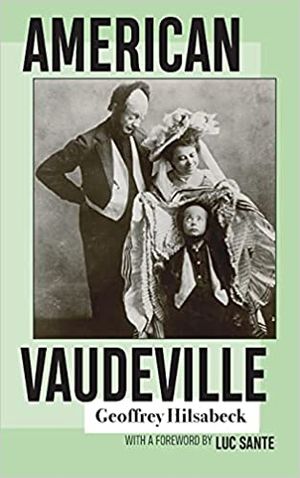
| American Vaudeville At the heart of American Vaudeville is one strange, unsettling fact: for nearly fifty years, from the late nineteenth century to the 1930s, vaudeville was everywhere—then, suddenly, it was nowhere. This book tells the story of what was once the most popular form of entertainment in the country using lists, creation myths, thumbnail biographies, dreams, and obituaries. A lyric history—part social history, part song—American Vaudeville sits at the nexus between poetry, experimental nonficti... |
 |
| An Illustrated History of British Theatre and Performance Paperback version of Robert Leach's 2019 hardcover book. Chronicles the history and development of theatre from the Roman era to the present day, restoring to the foreground of this evolution the contributions of women, gay people, and ethnic minorities, as well as the regional theatres of Wales and Scotland. Highly-illustrated chapters trace the development of theatre through major plays from each period; evaluations of playwrights; contemporary dramatic theory; acting and acting companies; da... |
 |
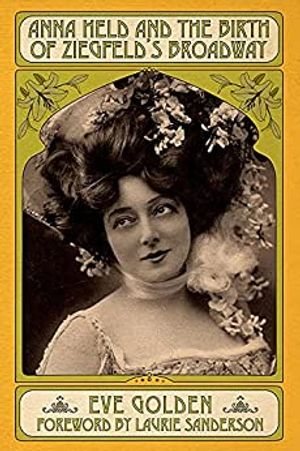
| Anna Held and the Birth of Ziegfeld's Broadway Updated edition of 2000 book by Eve Golden about the most popular musical comedy star during the two decades preceding World War I. The first wife of legendary producer Florenz Ziegfeld Jr., Held was the brains and inspiration behind his Follies. Together, they brought the Paris scene to New York, complete with lavish costumes and sets and a chorus of stunningly beautiful women, dubbed "The Anna Held Girls." She concealed her Jewish background and her daughter from a previous marriage, and suff... |
 |
| The Best American Short Plays 2018-2019 Pulitzer Prize winning playwright Paula Vogel once said that theater helps us learn how to be comfortable with being uncomfortable with each other. Revolving around the theme of "this is who we are," the one-act plays in this latest edition of the Best American Short Plays series (now in its ninth decade) explore the thoughtful ways in which playwrights are wrestling to make sense of our world today. |
 |
| Drama David Rockwell's fascination with theater has long informed his built work, which includes hotels, restaurants, and cultural institutions. Explores the core principles that Rockwell uses to enhance the impact of his architecture, with contributions from experts across the creative world. A new insight into the work of an important contemporary architect and a compelling case for the virtues of interdisciplinary collaboration |
 |
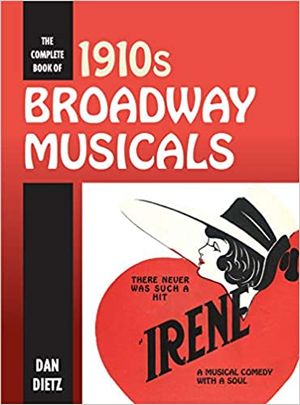
| The Complete Book of 1910s Broadway Musicals Newest in Dan Dietz' series of musicals by the decade. covers all 312 musicals that opened on Broadway during this decade, including The Balkan Princess, The Kiss Waltz, Naughty Marietta, The Firefly, Very Good Eddie, Leave It to Jane, Watch Your Step, See America First, and La-La-Lucille. Dietz places each musical in its historical context, including the womens suffrage movement and the decades defining historical event, World War I. Each entry features: Plot summary; Cast members; Creativ... |
 |
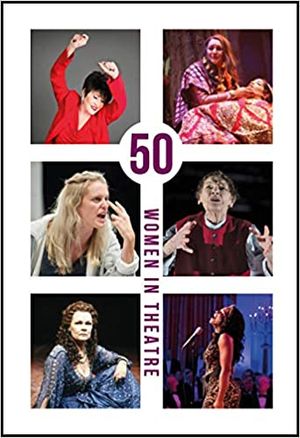
| 50 Women in Theatre Since 1660 when actresses first began performing on the English stage, women have forged bright careers in theatre, while men called the shots. Four hundred years of women playwrights, from Aphra Behn to Caryl Churchill, yet plays by women make up less than a quarter of staged productions in the UK, leading to a scarcity of roles for women. With women buying most of the tickets, theatre productions risk losing their relevance to modern culture if they fail to represent the many and varied lives... |
 |
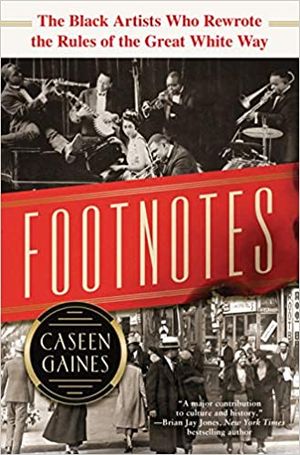
| Footnotes: The Black Artists Who Rewrote the Rules of the Great White Way For readers of Hidden Figures and Something Wonderful, Footnotes is the story of New York in the roaring twenties and the very first Broadway show with an all-black cast and creative team to succeed―and the indelible mark on our popular culture. |
 |
Videos
TICKET CENTRAL



Tickets From $59

Tickets From $77
Tickets From $70

Tickets From $59
