
Eisa Davis Deep Dives on ||:GIRLS:||:CHANCE:||:MUSIC:||, ANGELA's MIXTAPE, and WARRIORS
||:GIRLS:||:CHANCE:||:MUSIC:|| will run through June 21 at the Vineyard Theatre.
Do you have a burning Broadway question? Dying to know more about an obscure Broadway fact? Broadway historian and self-proclaimed theatre nerd Jennifer Ashley Tepper is here to help with Broadway Deep Dive. BroadwayWorld is accepting questions from theatre fans like you. If you're lucky, your question might be selected as the topic of her next column!
Submit your Broadway question here!
The Pulitzer Prize-nominated writer and actor Eisa Davis discusses her new play at the Vineyard, ||:GIRLS:||:CHANCE:||:MUSIC:||, as well as her other upcoming projects including a revival of Angela’s Mixtape and the new musical Warriors.
When did you first start writing the play ||:GIRLS:||:CHANCE:||:MUSIC:||, and what was your initial inspiration for it?
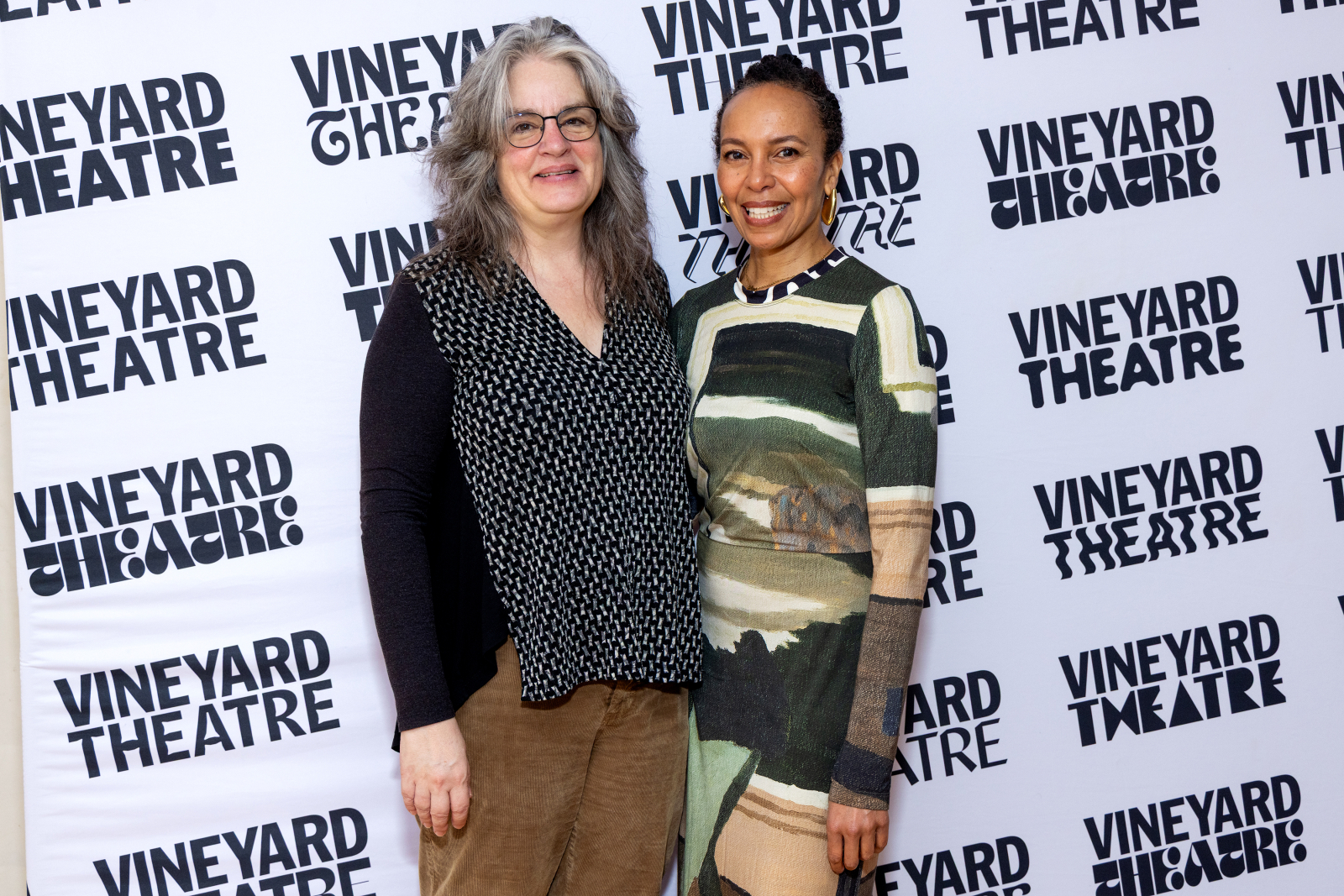
The reason why this play came into being is because of Pam MacKinnon.
In 2018, Pam MacKinnon became the artistic director of A.C.T. [San Francisco’s American Conservatory Theater]. One of her first actions as artistic director was to commission people that she really wanted to tell stories about the Bay Area, and that’s where I’m from. She thought: I’m coming into a new space where I can really highlight the stories of the people that are going to be my new contingency.
She and I had known each other. I’d been in a workshop of hers and of course, I just admired Pam MacKinnon, this person who is this amazing interpreter of Edward Albee and Craig Lucas and Lydia Diamond and Itamar Moses and all of these people that she had worked with. I was gagged that she wanted me to write a play.
She came to this play I was [acting in] at The Public Theater, directed by Tommy Kail—a Sarah Burgess play called Kings. And she was like, “How do you feel about writing a play [as] a commission for A.C.T.?" I was a little hesitant [at first]. I was a little burnt out from writing in TV rooms and having deadlines. But then I was like: I do want to write about the Bay and I want to write about the music program that I went to as a child, from ages 10 to 17. I want to find a way to honor the teachers that I had there and the beautiful days that I spent studying music: classical piano, voice, jazz, gospel, pop, and experimental music. All of that was happening in these incredible weeks in the summer that I spent [there] and also [in] weekly lessons during the year. So it was [due to] Pam’s urging. And then I said, “I always love to write about either a question that’s haunting me or a passion, a deep love I have, or both.”
I started actually writing the play, [during] a little bit of a residency in the Bay Area, in 2019. I wrote the first draft at the very top of 2020, right before COVID hit. From there, the process was that we did a Zoom workshop over the course of a week in November of 2020 with an adult cast and a teen cast. I wanted the teens to be able to tell me if they really identified with the writing that I was doing for kids their age and then the adult actors would be able to provide the experience and dramaturgical support that you need when you’re testing out a play in unfamiliar waters. We found a really cool way to jam together. This was early Zoom days, before it was possible for artists to really make sounds at the same time. But we found a [way]. And I was like: let’s find a way to always keep this element of chance and improvisation going in these workshops. So, we did that.
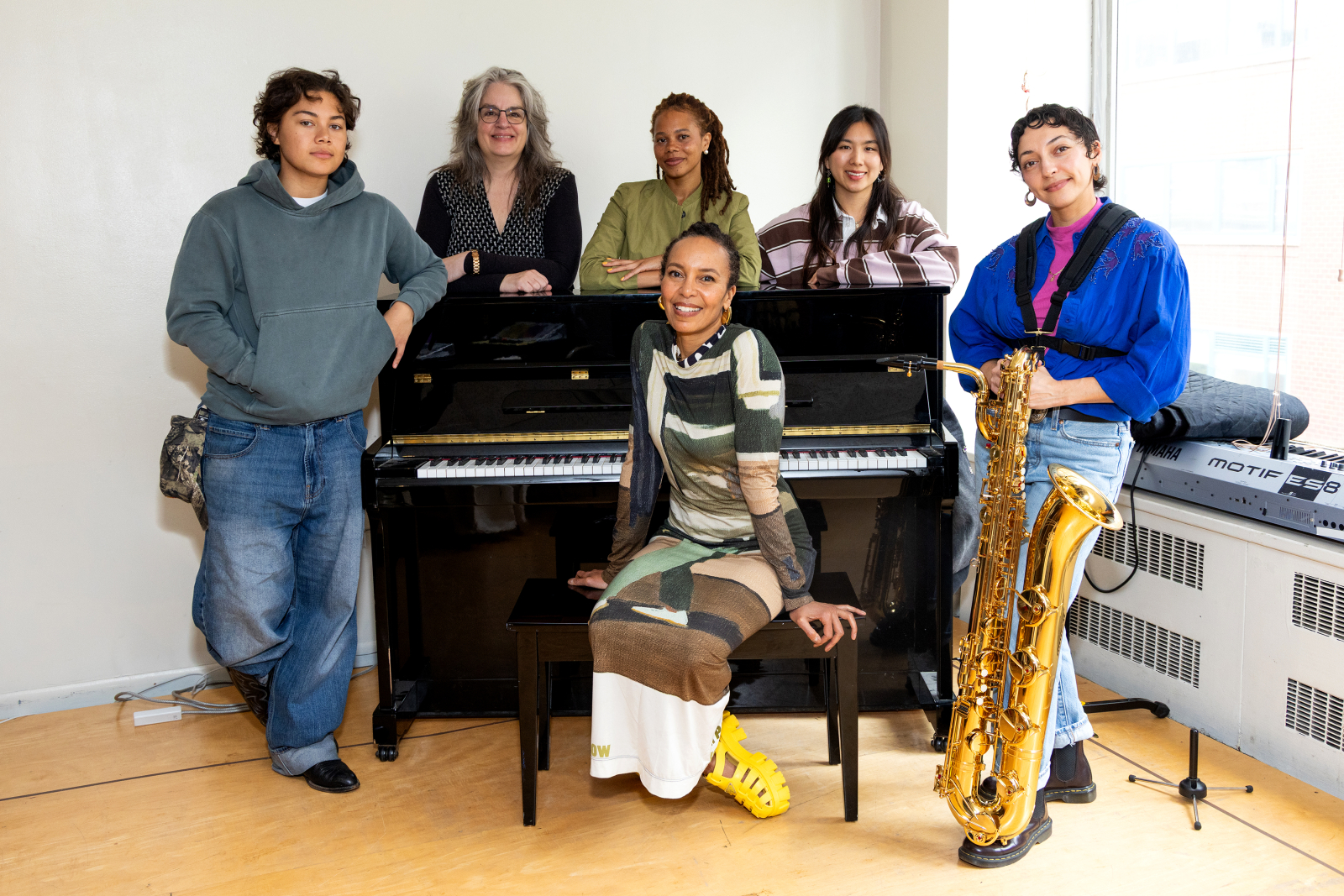
I wasn’t sure if Pam was really into the play after that. I didn’t know if they were going to have any funding to keep going with it. But then they were responsive at A.C.T. and we did another reading. I did a writing residency at A.C.T. in 2023 and that’s where the shape of the play started to happen. I originally wanted to see if I could randomize all of the scenes. I thought maybe I could find a way to make this work with the scenes going in any order. They would be determined by the audience in the same way that the audience chooses the tone row now. Maybe each scene could be tagged to one note and then the audience would determine the order of those notes and then we would have a play that [could] go in every which way possible. We tried that out in workshops [and] it didn’t work at all. I failed miserably, but that’s what experiments are for. You find out what [works]. I realized that the story I wanted to tell was cumulative, that it was a narrative that required things being consequential. There was such a really strong response [to] that reading. The emotional shape of the play really started to land in 2023.
In 2024, A.C.T. said yes, we want to do it. And then [at] the Vineyard, where I had a commission and had been given an award through Paula Vogel and Daryl Roth, I [asked]: “Do you think this play would work as my commission here as well?” They read it at the Vineyard and loved it, so we got to do this co-production between A.C.T. [in the Bay Area] and the Vineyard in New York. I can’t say how beautiful that process has been. Often you’ll have that with a musical where you have an out-of-town tryout. And that’s what we got to do, we got to spend all the time we needed to spend on really developing the music and the relationships between the characters. We got time for the actors to really start to feel at home in those shows.
And once I was able to see the run in San Francisco, I pulled apart the play again. Once [I] had that idea of ‘can scenes go in any order?’, even though it wasn’t something that we formally did, it was something that I definitely did in the revision. And once we got to New York, I rewrote a lot of the play, combined scenes, cut scenes, [and] wrote new scenes. Even in rehearsal, we changed the order of how the scenes would go. What you’re seeing on stage at the Vineyard now is really, really different than what was playing in San Francisco in March and April and of course, what we had in all these workshops.
Along the way, it’s really transmogrified and I love that Pam and Joy Meads, our dramaturg, have been so trusting of me listening to the play and letting it tell me what shape it wants to take, what it wants to say, what the characters have to offer us in terms of their story being a reflection of what it is we in the audience are also feeling. There are these really passionate moments that they have as young people that I think so many of us can really identify with, especially folks who are in New York who have a strong arts background. And if they aren’t [still] in it, still have a deep love for it, and that might even be why they live in New York at all.
I love that what you shared shines a light on how I felt watching the play—I felt the nostalgia the characters were going to have [for this time] before they have it. Would you say that the play is autobiographical or semi-autobiographical?
Neither. And it’s not a memory play—it’s actually a flash-forward play. We talked about that distinction because it’s very different to be looking back on your life than looking forward. Of course at the end of the play it can feel like: was that a memory play? But I really love the energy [where it’s] something that’s moving forward in time. And [the play is] not autobiographical at all. The characters are invented, the plot is invented, and even the setting… I was inspired by the music school that I went to, but that was a long time ago and [my] school was all gender.
The way that Pam always puts it is: it’s not autobiographical, it’s just very personal. And the way that I put it is that [the] feelings of the play are from the deepest recesses of my soul. That is unmistakable. That is me. It’s just my heart on a plate. There’s nothing that happened to me in the play—except for stealing some 2-liter bottles when I was a kid with some friends and getting into some mischief with that. And the love of music, obviously. But it’s not autobiographical [although] it’s definitely very [deeply] felt and very [much] a world that I know.
I’m so curious how you strike a balance [between] those feelings of reaching back into yourself and what it felt like to be a young person when you were going through a similar program and then the present day of it all. I feel like anyone that’s not in the current generation is always talking about how different it is to be a young person [now] because of technology. You spoke a little bit about working with people of a different generation in the Zoom workshop. Can you talk more about how you work on a piece that has young people of today?
I didn’t feel it as a challenge because I really trust the listening that I do as an artist. No matter who I’m writing about, I’m listening very carefully to the stories they want to tell, what their interests are, how they feel unvoiced, sometimes.
There’s a play that I wrote that David Mendizábal directed back in 2022 called Mushroom. That was about undocumented mushroom pickers in Pennsylvania. That play is bilingual in both English and Spanish and there are actually some other languages in it as well. Of course I’m not an undocumented mushroom picker and yet I just used the exact same technique of listening, just listening. What are the stories that need to be told that we don’t know about?
Or my play, Bulrusher. In some ways, that’s an imaginary kind of listening. I was listening to the voices of my elders in Birmingham, Alabama, where some of the characters are from. I was listening to the sound of the dialect that I had only heard in a couple of oral histories and read in a book. I felt that there was a real kind of rhythm to it that I understood and could tap into. So in some ways, just as I work as an actor and step into different roles, I do that as a playwright, stepping into different roles and trying to find what genuine connection and voicing I can give. So again, [here], I was looking for conversations with young folks in this process.
It’s been really wonderful having young folks as audience members. We had a student matinee yesterday and there’s such a sense of recognition. People feel like: oh my gosh, this is my story, this is something that I feel. People [were] coming up to the actors afterward and young folks were just sobbing and sobbing saying, “I feel the same way.”
There have been times, too, where I have listened and I haven’t listened fully enough. And then I have been, gently or firmly or angrily called in by the people that I am attempting to represent. When that happens, I do everything I can to make sure that they feel that their representation is fair and accurate.
Can you talk more about how you feel your work as an actor impacts your work as a playwright and specifically if it intersects with how you talk to actors in a play that you’re writing?
A lot of my writing has always come from a place of: what are the roles that I would want to play as an actor? Of course I can’t play these characters in ||:GIRLS:||:CHANCE:||:MUSIC:|| but were I in that age group, I would love to play these characters. There’s a bit of wanting to make sure that actors have something that feels really juicy and meaty, and that they aren’t in any way feeling sidelined by the story. I think it’s good dramaturgically to not feel that anyone has a lesser role than anyone else. Even someone in this play like Clementine, who is the character that we hear from the least has got a certain pizzazz and a certain sense of being over it all. She doesn’t need the drama that is going on in this triangle of these other three teens. She just practices [music] and she does her thing and that’s what makes her happy. There have been a lot of people who have come up to me afterward, or come up to Gia, who plays Clementine, and said: “That’s the character I’m obsessed with” and “I am trying to activate my inner Clementine and not be tripping and just do what I do”. So I think there’s a bit of wanting to make sure there are roles that I feel I would be really interested in.
In other plays I’ve written, there is some role that is a ‘me’ in it. I’ve written parts that I would love to play myself. And sometimes that happens and sometimes it doesn’t. I want the play to be its own independent venture that doesn’t depend upon my presence or not. I’m always trying to think with the most amount of compassion [and] inclusivity when I’m considering how characters work as a playwright and how actors are going to play these roles—what it is they need in the story and then in the long term while doing it over the course of a run.
How it affects the way that I am with actors is just that I adore actors so much. I think there’s a real element of sacrifice in what all interpretive creative artists do along with bringing the best of [themselves] that’s there. So another thing I’ve done, especially in performance pieces that are more devised is that I will ask the performers: is there something you’ve always wanted to do on stage that you’ve never gotten a chance to do? It’s a good diagnostic, even if we don’t actually do that thing because then I can feel what it is they’re yearning for and longing for and I’ll see if there’s a way to bring that into the piece.
[Then there’s] the energy of an ensemble, given my training as a musician and as an actor. My teachers in grad school always romanticized the big ensembles: The Group Theatre and the Moscow Art Theatre… I’m a member of The Actors Studio. And [there’s] this whole sense of ensemble, when you have a really strong sense of ensemble and a sense of trust. I love the LAByrinth Theater Company, I love theatre companies where the actors work together again and again. When you have that level of intimacy, you can achieve feats that you couldn’t if you were just meeting each other.
Even though in a lot of pieces that I have made and collaborated with others on, we were coming together for a brief time, then making a thing, then saying goodbye, I really just loved that sense of strengthening our ensemble. If people want to be with each other, if people are learning from each other, if people are able to trust each other on stage no matter what happens, then you’re just going to have that much more of a beautiful experience. That was something we had in Passing Strange, in spades. It also [came] from doing three versions of [the show]: Berkeley Rep, The Public Theater, [and] Broadway. I feel like we got to do that with [ ||:GIRLS:||:CHANCE:||:MUSIC:||], going to A.C.T. and then coming here to the Vineyard. Ensemble is something that I think is really important to the way that I am engaging with actors.
I don’t ever want to tell anyone what to do but I also have a very clear idea of what something is and if something is out of that range. It’s literally about tuning, like a tuning fork. If something’s out of tune, then the whole thing just feels off. So I try to learn from Pam and remember what it is that I love as an actor which is always having very positive and actable notes and suggestions. I try to err on that side. It’s all a matter of relationships and having this shared goal of wanting to make something that feels like the highest expression of what it is that we can do together and what the piece is asking of us.
Tell us more about your history with the Vineyard. There’s your commission, but have you had experiences there as an audience member? What do you feel the space has specifically brought to the piece and do you have any other thoughts about what it’s like to work at the Vineyard?
On this piece specifically, what I’ve really been loving is the intimacy of the space. That’s something that we didn’t have in the same regard at A.C.T. because the beautiful Strand Theater there has about 283 seats. It’s a converted movie theater. So moving from there with the exact same set into the Vineyard meant that the play sounds different, it feels different. We don’t have the height that we had above the set. Sight lines are different.
We had these two really incredible iterations of the play. It’s kind of like the play was born and raised in the Bay and then it got seasoned and came into its own in New York. Kind of like me.
I’ve really loved working with the Vineyard and all of the programming that they’ve been doing, with post-show concerts and affinity nights. It’s been really fun to just be there every day.
And what I’ve loved about the Vineyard over the years is that I’ve seen some of my favorite plays there. I’ve seen How I Learned to Drive, Indecent… I’m mentioning Paula Vogel because Paula, along with Adrienne Kennedy, is the most crucial champion of my work that I have had. I don’t think that I would really even have a career as a playwright had she not plucked Bulrusher out of the slush pile and said, “This really deserves recognition,” on the Pulitzer jury. And then just the people that [the Vineyard] has produced and the energy. I’m thinking very specifically of Deirdre O’Connell in Dana H. The second time I saw Tarell Alvin McCraney’s work, after seeing The Brothers Size at the Public, was Wig Out! The list goes on and on of who has been at the Vineyard so it means so much to be able to join those ranks.
And then I’ve had all of these interesting other relationships with the Vineyard folks. [Longtime Vineyard artistic director] Doug Aibel has cast me in [projects] as a casting director. [Current artistic director] Sarah Stern and I actually taught a course together at Princeton with Trip Cullman that was designed to dive deep into the late Michael Friedman’s unfinished work, American Pop. So there are all of these really interesting tentacles between me and the Vineyard and being able to have the residency there through this award and then them reading this play and instantly being taken with it and jumping on board [to] co-produce, it was really an honor. I still can’t believe this is happening.
People are kind of shocked when I say this but I haven’t really had much produced in New York at all. I had a show that was at HERE Arts Center in September called The Essentialisn’t. Prior to that, the last full production that I had in New York was in 2009 with Angela’s Mixtape. So it’s been 16, 17 years since I’ve had a play on. So the fact that I’ve had not only one but two this season is pretty incredible. And I am just so thankful to the Vineyard. The experience of doing this play, because it’s my heart on a plate, has really just felt like a dream. Of course you want dreams to go on and on and on. But we only have two-and-a-half weeks left. I just love these actors. I know that they’re going to continue to be folks that people really look to and follow. I just can’t wait to see them continue to blossom and ascend in all of the work that they’ll do.
Is there anything that you've experienced recently as an audience member that you've found really inspiring? Theater, film, TV, a song, anything that you've found inspiring as a viewer?
This is always so tough because I see so much and then it’s hard for me to remember the most amazing things. Also I make a real effort not to see, read, listen to anything but something I know is going to be good. A lot of people are like, “I’m going to hate-watch this” or “I’m just going to watch some trash to calm me down”. I don’t do that. I’m always going to give my whole heart and soul to the listening, to the watching, to the reading. And things really stay with me for a long time. I’m sensitive that way. If I see a film, I know it’s going to be in my psyche and really affecting the way I see the world for the next two days. So I have to be really cautious.
Speaking of film, I saw Is God Is, [with] Aleshea Harris [making her] incredibly assured feature debut, adapting her play. I never got to see Is God Is because I was doing the play Kings at the Public at the same time it was playing at Soho Rep. Seeing Mallori Johnson—who I got to work with on Kindred, Branden Jacobs-Jenkins’ adaptation of Octavia Butler’s novel—with Kara [Young] as twins and the entire cast was very exciting to me as someone who hopes to make film. There’s a screenplay I’ve written that I’m looking forward to actually shooting. And I’m always so thrilled to see someone who is as bold and as much of a visionary as Aleshea is, just do the thing.
In terms of what I’ve been reading, recently I went back to reading the poems of Wanda Coleman who was this really wild and amazing poet based in L.A. I’ve been part of this organization called Cave Canem, which is a home for Black poets. Cornelius Eady, whose play with music Running Man was at the Vineyard years ago starring Joe Morton, is one of the co-founders of Cave Canem.
All of the artists I’ve been working with recently have really been inspiring me. Aneesa Folds! And this whole cast of [||:GIRLS:||:CHANCE:||:MUSIC:||]. Also recently being able to spend a little time at events with Ayo Edebiri, who is finishing this season of The Bear and is in Proof right now on Broadway. Being able to see how that play could transform, under Tommy Kail’s direction, and this cast of Don Cheadle and Jin Ha and Ayo and Kara. Seeing the original… that’s one of my favorite endings of Act One of all time. Getting to see this new iteration with this family, it has different connotations. Of course, David Auburn made a few changes in the script to account for the different kind of experience that a Black family would have under these circumstances.
I’m really excited for my buddy Lin-Manuel Miranda [who] is shooting a movie version of Dave Malloy’s Octet. I’ve seen little videos and pictures he sends from set. I cannot wait to see that.
Just today I was listening to Bobbi Humphrey, who’s this really amazing jazz flautist. If you listen to hip hop or if you listen to A Tribe Called Quest or [other] hip hop that looks toward jazz for samples, you would recognize that sound. It’s very much a sound that I grew up with in the Bay Area with my mom. [There were] these early mornings and evenings of listening to really incredible jazz and funk. Bobbi Humphrey, I want to put her up today.
Is there a previous play of yours that you feel most passionate about bringing to wider audiences? A piece where you think: that's what I want to get a major New York revival?
I would say Bulrusher. It was first done 20 years ago at Urban Stages and just a few people saw it. Since then, it’s been seen in regional theaters. Then we did a Zoom reading during the pandemic. I would really love to see that play on stages here in New York. I think that would be really thrilling.
I saw Paula Vogel when she came to see ||:GIRLS:||:CHANCE:||:MUSIC:|| last week and she was still on me. She was like: “When am I going to see Bulrusher in New York? We’ve got to see it in New York!” She’s obsessed with the play. I would say that is one I would really love to see revived.
Because I have this amazing Signature residency in front of me, which I still can’t quite get over, we had a reading just yesterday of Angela’s Mixtape, which I mentioned we did in 2009 through New Georges and the Hip-Hop Theater Festival. And we’re going to be doing that [at the Signature] next spring. I think I’ll be in it, which will be really fun. So that’ll be another revival. I think I may still underestimate the value of that piece, because it’s a story abut me and my family and I just feel like: oh, I shouldn’t talk about myself. I should just invent things and focus on the stories of other characters. But I think especially after doing this reading yesterday and hearing how [the play] rings now, there’s a lot of value in it that can lead to a sense of optimism [and] empowerment that I think I need, that we need right now in the midst of everything that is happening to us in this demonic period of destruction that’s going on.
When my aunt Angela [Davis] wrote her autobiography, when she was edited by Toni Morrison at Random House, she didn’t want to write about herself. She felt she was too young. She felt that there wasn’t anything in particular that set her story apart from any other political prisoner or Black woman living in the United States. She [has] always really identified with the collective and always talks about how the collective itself is what freed her. It’s kind of auspicious that we’re talking today on June 4th, because that’s the day when she was acquitted of all charges in 1972. But she was really hesitant to write an autobiography because she didn’t want the spotlight to be on her in any sort of unfair or exploitative or disproportionate way. Yet she went ahead and wrote it. She understood that there might be something of use, something helpful in telling her story for others.
And I think that’s something I’m really discovering about Angela’s Mixtape. It just sort of burst out of me, like a volcanic eruption. Again, I was very hesitant about sharing it, and yet it had to be shared. I’m really understanding from the response we had yesterday from the actors and everyone who was watching [the play] that there’s something very powerful in learning about radical struggle, the devotion to social justice, [and] the importance that cultural work has towards meeting those goals. It’s important to understand that the goals may not be met in your lifetime but that you have to do your part to keep moving the ball down the field. There are so many ancestors, so many spirit protectors, so many people who have been cut down in their prime, who are working for our well-being, welfare, benefit, freedom, and liberation. That’s the spirit in which I offer that play. I want all of my work to be helpful.
When you’re talking about generations, there’s all these different ways that our neurology has changed with the advent of our use of electronics and social media. And I know that there’s something very deep and very human we can all really benefit from connecting to, regardless of age and neurology. I’m sitting across the street from Brooklyn Tech and I know that barring phones in [the New York public] schools has had this incredible effect on all of the students who are like: let’s play board games or hang out and talk to each other at lunch. And how about that? [It’s] simple, simple, simple. I think that’s why I love theatre so much. It’s a kind of gathering where we can really make time away from the constant onslaught and just figure out how we live in the world and how we want to live together.
I can’t wait to see Angela’s Mixtape. That makes me so excited to see it. Also everything you said articulates exactly why I wrote my book, Women Writing Musicals—to give voice to those artistic ancestors. Thank you for that beautiful [thought].
Of course you’re currently also working on the stage adaptation of Warriors. Can you talk about what you’re most excited about, about bringing that to the stage?
Just the fact that it’s Warriors [and] the fact that I’m working with Lin-Manuel… those things, in and of themselves, are exciting and incite passion. The thing that I’m most passionate about in this project has been the process of discovery with Lin, finding out the way that we adapt this film, which was an adaptation of a novel, which was an adaptation of a Greek narrative. How [do] we adapt this film into a concept album? And now, how [do] we adapt a concept album into a piece that is visual and moves in time and is embodied?
The process itself is sort of like being a mad scientist in the lab and you’re just trying to run different experiments and solve problems. Sometimes you’re trying to create cracks in the concrete so a little rose can bloom. Sometimes you don’t even know what sort of assumptions you’re placing on your own work until you have a conversation with your director or with a trusted friend or [collaborator]. Then you’re like: oh, I hadn’t looked at it from that perspective, let’s see if there’s a way to really honor that. Sometimes people are very prescriptive and say: you need to do this. Even though notes in that format don’t necessarily help, it usually points to something that is slightly off-tune. You can get a note that you’re not going to take, prima facie, but [it’s about] the note under the note. [It] can get into your unconscious and then you start finding it addresses the structural fissure that was making things feel unstable. The process!
I’m really hyped about these actors. It’s a very intense roller coaster ride. We want to make sure that we have every sort of possible emotion go off in [the audience] while also making this a very powerfully moving, necessary narrative. You’ve experienced this as a historian of musical theatre and lover of musical theatre: the music may be incredible but if we’re not all together inside the embrace of a really powerful narrative then we don’t feel the kind of fulfillment and satisfaction we want to have. It’s different if you go to a concert and you’re hearing all this great music and you’re standing up, going to the bathroom, going over to the bar, talking to your friends. That’s a completely different environment than sitting down in a chair that is usually not going to give you much in the way of legroom. You’re kind of uncomfortable, you’re in this dark space. Often, people come just to go to sleep there, so what’s going to make a person who’s slightly uncomfortable, maybe sleepy, and confined really sit on the edge of their seat and thrill not only to the music but to the story that’s holding the music?
Lin obviously knows how to do that. He has a tried-and-true track record of doing that really well. And I love that he invited me along for the ride and wanted to know what it was that I saw in the potential [of Warriors] and what I could offer that he couldn’t see. We always joke with this piece that the baby looks like both of us. Initially, he invited me to be the book writer, and he would do music and lyrics. Then, as our collaboration went on, I would send him voice memos and be like, “Here’s a bass line”, “Here’s a chord progression”, “Here’s a synth line”, “Here’s a hook”… So we both realized that we were both going to be doing all of the jobs. It’s mainly sung through as well. We realized we shouldn’t try to chop up what our particular duties were, that it wasn’t going to be compartmentalized. We were both going to be weighing in on everything [and] creating everything. Sometimes it’s good to have two people because I can walk off and write something and he can walk off and write something… and it’s the best when we run toward each other, like “Listen! Listen to this!”
We both have veto power over what the other person does. We have really come together as this single brain that’s been approaching the project. Now, working with [director] Jenny Koons, who is this incredibly skilled craftsperson and has been putting together our whole creative team, this is a really wild moment of things starting to become three-dimensional and always trying to keep it aligned with our vision. Sometimes it’s not going to be exactly what we imagined but it has to be in that area. It has to feel like it works from the very germ of the piece and can’t be just something that seems like it would be a cool thing to do. The batter has to be fully combined [into] one compound that doesn’t have any lumps in it.
That’s where we are right now: [figuring out] what’s going to happen when people are dancing and fighting and singing. How do we actually do all of the things that we didn’t have to worry about in the album? We’re on the subway, we’re being chased by a bus, we’re running from the Bronx to Coney Island. How do we depict all of this—or not depict it and evoke it [instead]? Those are the kinds of questions that we’re asking.
The thing I’m passionate and excited about is the making of the thing—and getting back into that, using the high I’ve been on, [from] being in this world of ||:GIRLS:||:CHANCE:||:MUSIC:||.
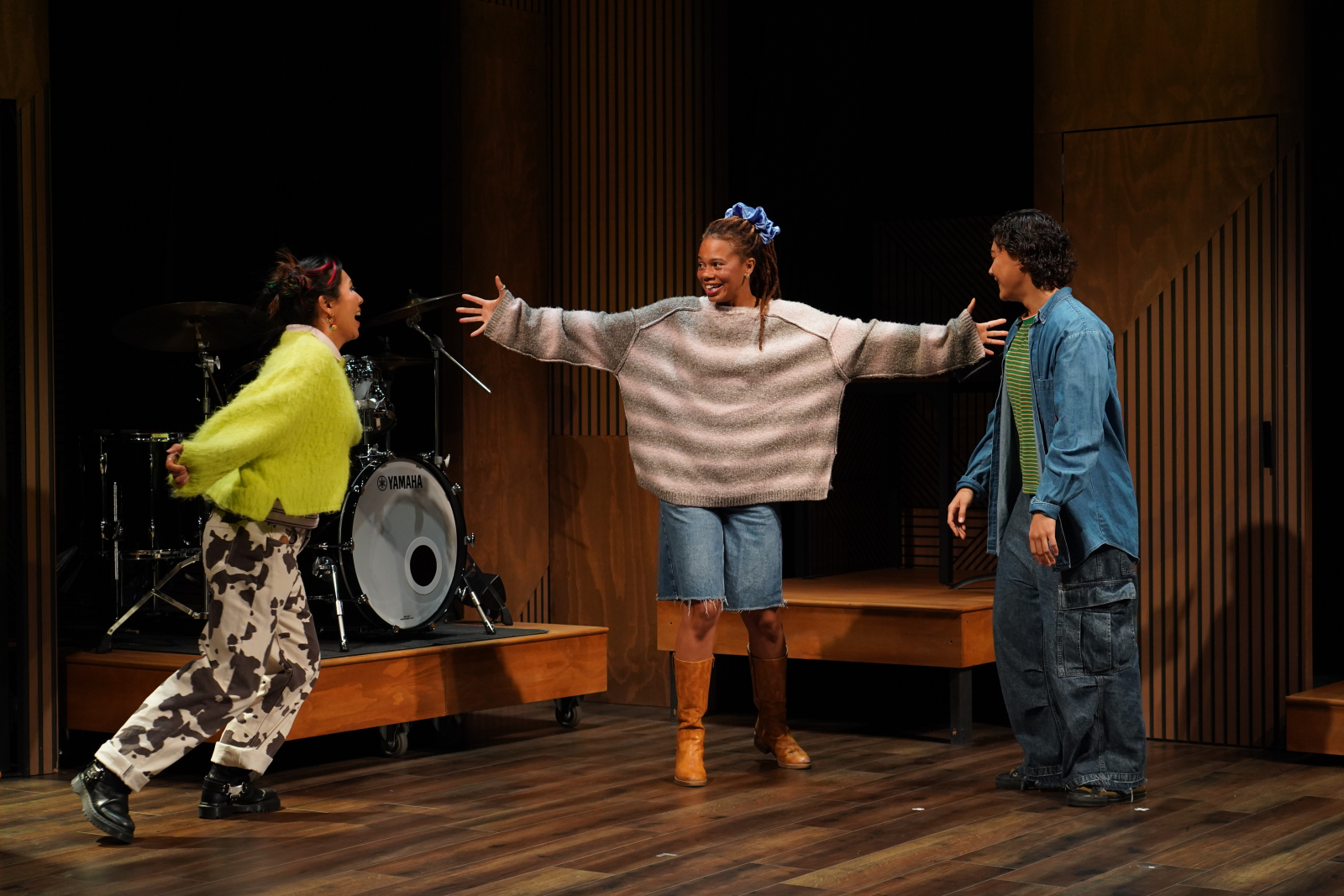
Is there anything else you want to share about ||:GIRLS:||:CHANCE:||:MUSIC:|| for anyone who’s considering coming to the Vineyard before June 21 to see it?
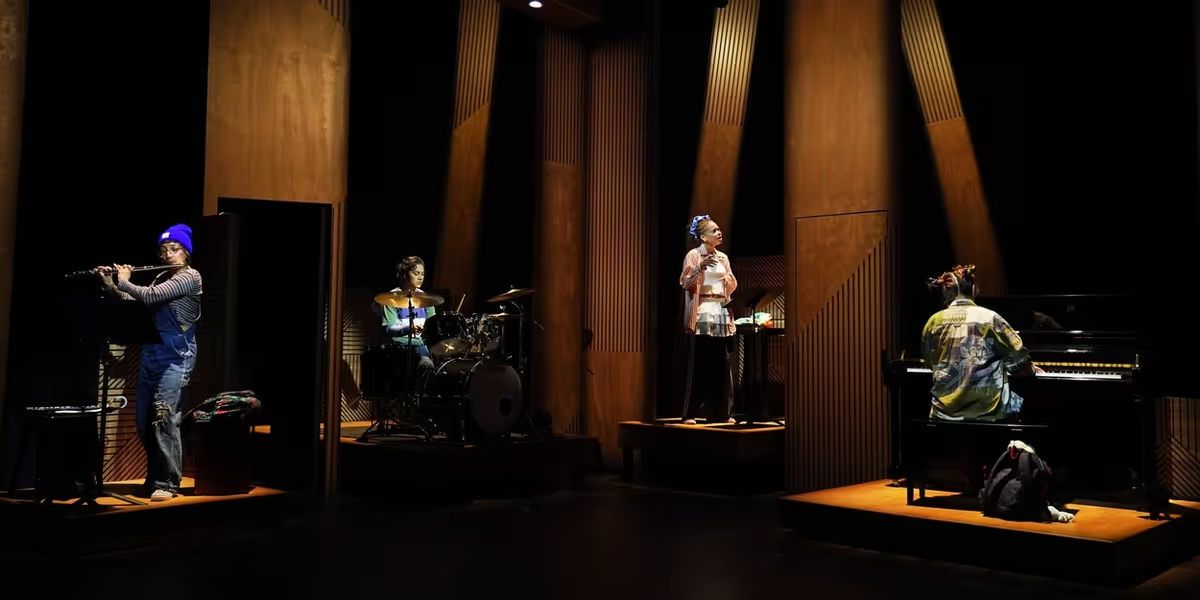
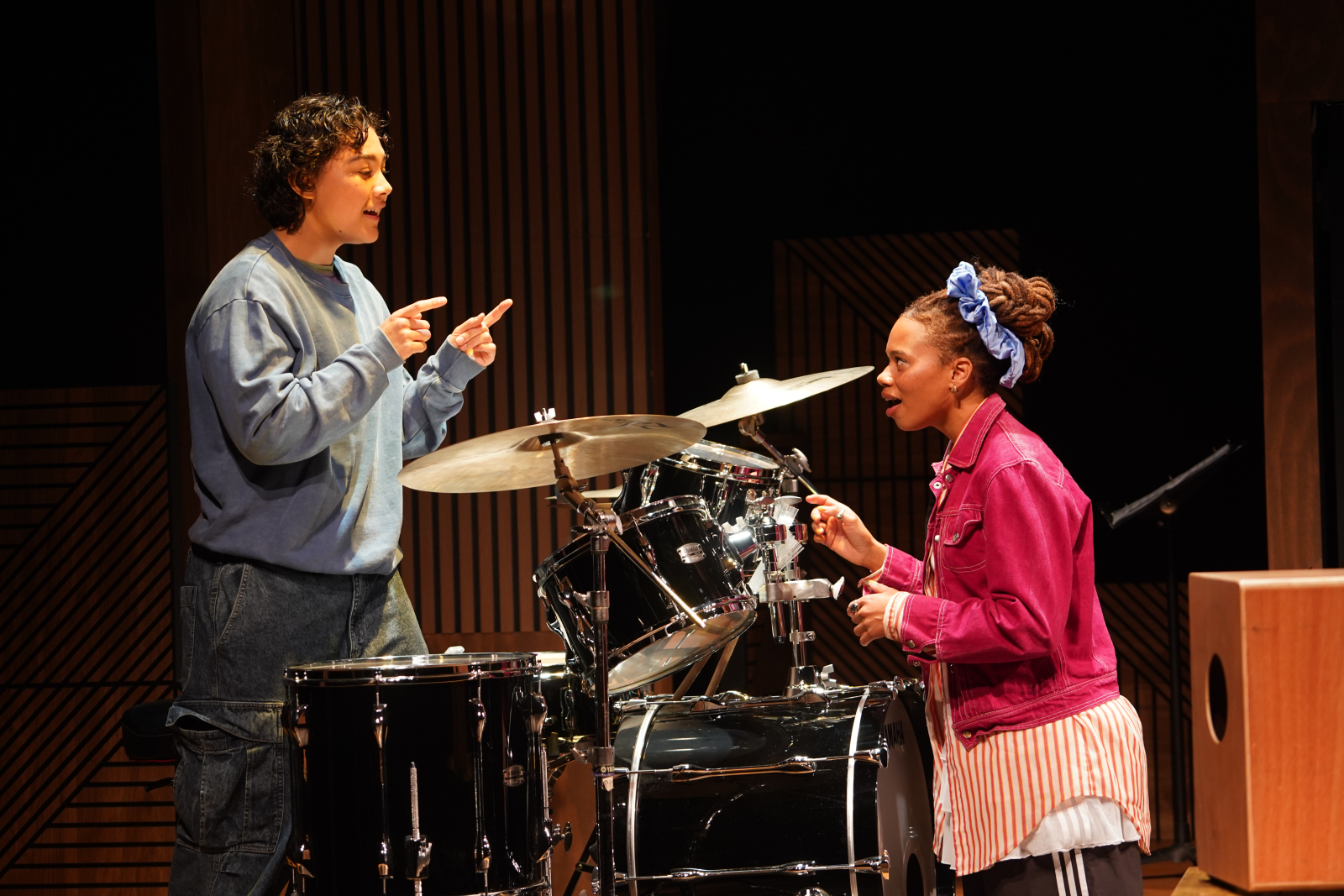
A few things. Naomi Latta, who plays Margot did not know how to play drums when she took the role. We [asked], “Do you think you can learn?” She said yes [and] she did. That blows my mind. That shows you the level of talent, the level of devotion, dedication, love that these actors have for this piece.
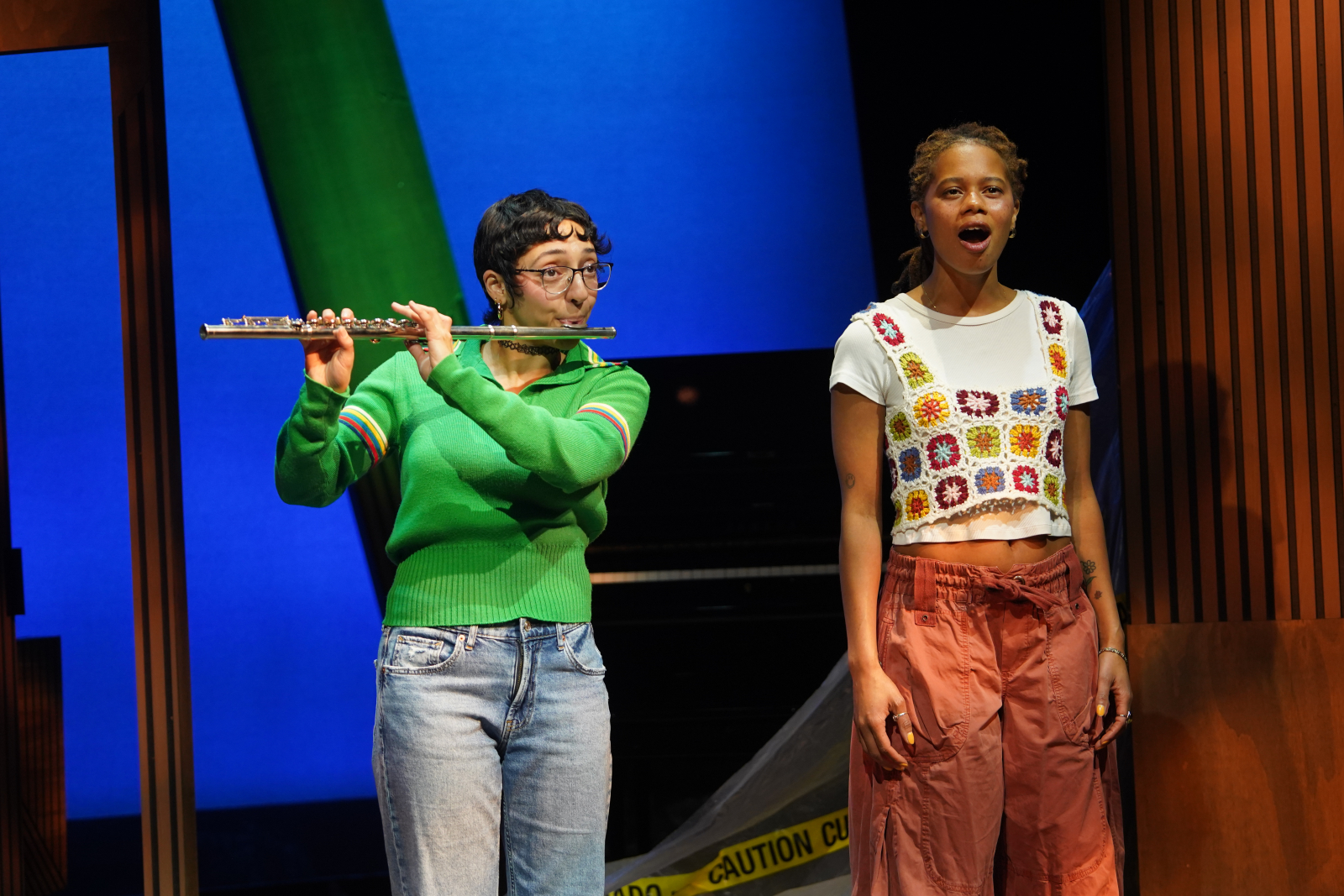
Another wild little factoid is that when I was in this program as a kid, I composed a lot of music, and there’s a little excerpt of one of the pieces that I composed in the play. It’s not something that anyone would ever catch; it’s something that is an Easter egg that only we know in the cast. And Pam. It’s during a practice room scene. Gianna DiGregorio Rivera, who plays Clementine, on the flute, is playing this little line that I wrote when I was for 13 or 14. That was fun to be able to throw in there.
Another thing that I feel is important to share is that the music itself isn’t something that people usually see on a theater stage—and definitely not on a Broadway stage. It’s the kind of music that you might hear in a music school or maybe at a jazz club. We evoke Esperanza Spalding [and] Craig Taborn. So there’s a different aesthetic in the music than I think people are used to seeing in theatre. I think it’s very welcome and people are responding to it. [They] are into that music and that sound and I’ve been really excited about that.
Come see the piece and feel the inspiration embedded in it it. There’s a real sense of reflection that happens automatically when you see the piece. And [with] a cast like this, it’s a moment in time that I feel is really precious [given] where they are in their careers. I was sitting and talking with Hillary and Naomi last night and they were saying that this has been so challenging for them. Something I often say to them is: “Don’t hide.” [Hillary said] not hiding in a rehearsal room once you’ve started to get to know people is one thing, but then not hiding once the lights are on you is another. They’ve really taken that challenge on. We’ve talked a lot about literally removing your skin for these characters. This story is so raw, so vulnerable. They’re doing that, and it’s really uncommon.
We’re in New York and we’re going through a lot as a nation and a globe. If you’re a queer teen of color, you have a lot of things that are challenging for you. And for them to say, I’m actually going to open my heart and give everything that I am, unvarnished, without that protective armor, is a real gift that audiences don’t always receive. And I understand why people keep armor on. I really do. I think what we’ve been able to do is just create enough of a brave space for each other where we’re able to give that open-heartedness. I would love for people to be able to experience that while we’re running.
Photo credit: Carol Rosegg

Comments


|
Powered by

|
Videos

.jpg?format=auto&width=365)